Hochschule Karlsruhe Hochschule Karlsruhe - University of Applied Sciences

Institute of Materials and Processes

Profil

Wer sind wir?

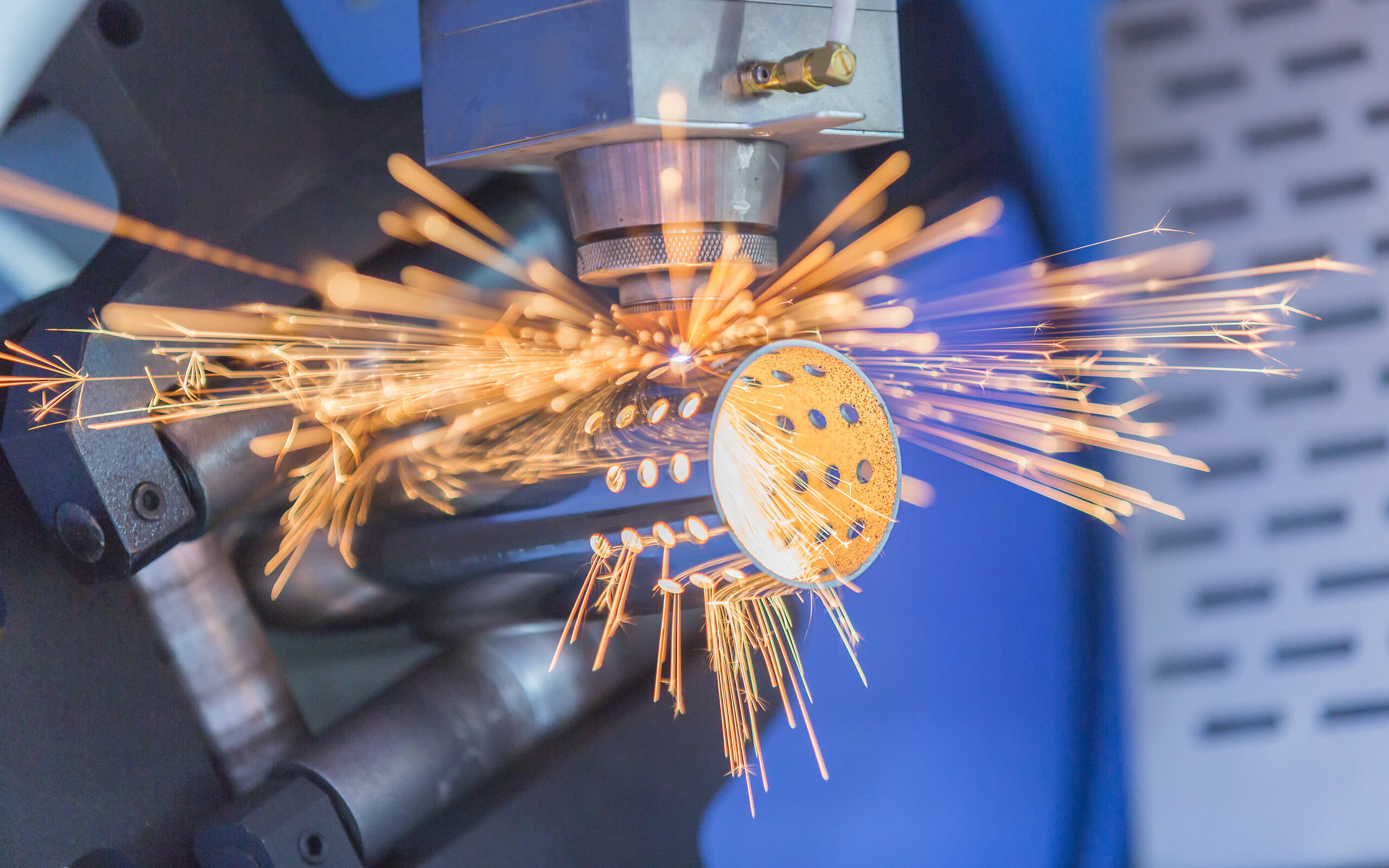
Das Institute of Materials and Processes (IMP) ist Ihr Ansprechpartner für einen ganzheitlichen Blick auf Produktion und Werkstoffwissenschaft. Wir wollen Zusammenhänge über alle Skalen hinweg verstehen und gezielt optimieren – von der Automatisierungstechnik über neuartige Produktionsverfahren bis hinunter zur Verformung von Werkstoffen auf der Ebene der Mikromechanik.

Dabei verbinden wir Experiment, Simulation und datengetriebene Methoden wie künstliche Intelligenz. Ein besonderes Alleinstellungsmerkmal ist unsere Materialprüftechnik, die eine detaillierte Analyse von Werkstoffen und Prozessergebnissen erlaubt.

Ihre Fragestellung passt in keines unserer Themen? Sprechen Sie uns trotzdem an – wir prüfen gern, ob und wie wir Sie unterstützen können.

Kontakt

Institutssprecher
Prof. Dr.-Ing. Martin Kipfmüller
Tel.: +49 721 925-1905
martin.kipfmuellerspam prevention@h-ka.de

Stellv. Institutssprecherin
Prof. PD Dr.-Ing. Katrin Schulz
Tel.: +49 721 925-1856
katrin.schulzspam prevention@h-ka.de

Was bieten wir?

Wir verbinden Forschung mit Anwendung – für Unternehmen genauso wie für Studierende.

Unsere Forschungsbereiche

Mikroskopaufnahme kugelförmiger Werkstoffpartikel

Materialwissenschaften und Werkstofftechnik

Werkstoffe verstehen, simulieren und gezielt verbessern – von der Mikrostruktur bis zum Bauteil.

Prof. PD Dr.-Ing. Katrin Schulz
Prof. Dr.-Ing. Uwe Wasmuth

mehr erfahren

Hand berührt eine im 3D-Druck gefertigte Roboterhand

Robotik und Produktionstechnologien

Robotik, Automatisierung und Fertigungsverfahren – vom einzelnen Prozess bis zur intelligenten Produktion.

Prof. Dr.-Ing. Martin Kipfmüller
Prof. Dr.-Ing. habil. Catherina Burghart
Prof. Dr.-Ing. Jan Kotschenreuther

mehr erfahren

Was suchen wir?

  • Innovative Fragestellungen aus Unternehmen. Treten Sie mit uns in Kontakt – über unser Anfrageformular.
  • Engagierte Studierende und Mitarbeitende, die Spaß an innovativen Themen haben und die Forschung voranbringen wollen. Aktuelle Angebote finden Sie unter Studentische Forschung.
Deepthi Patric
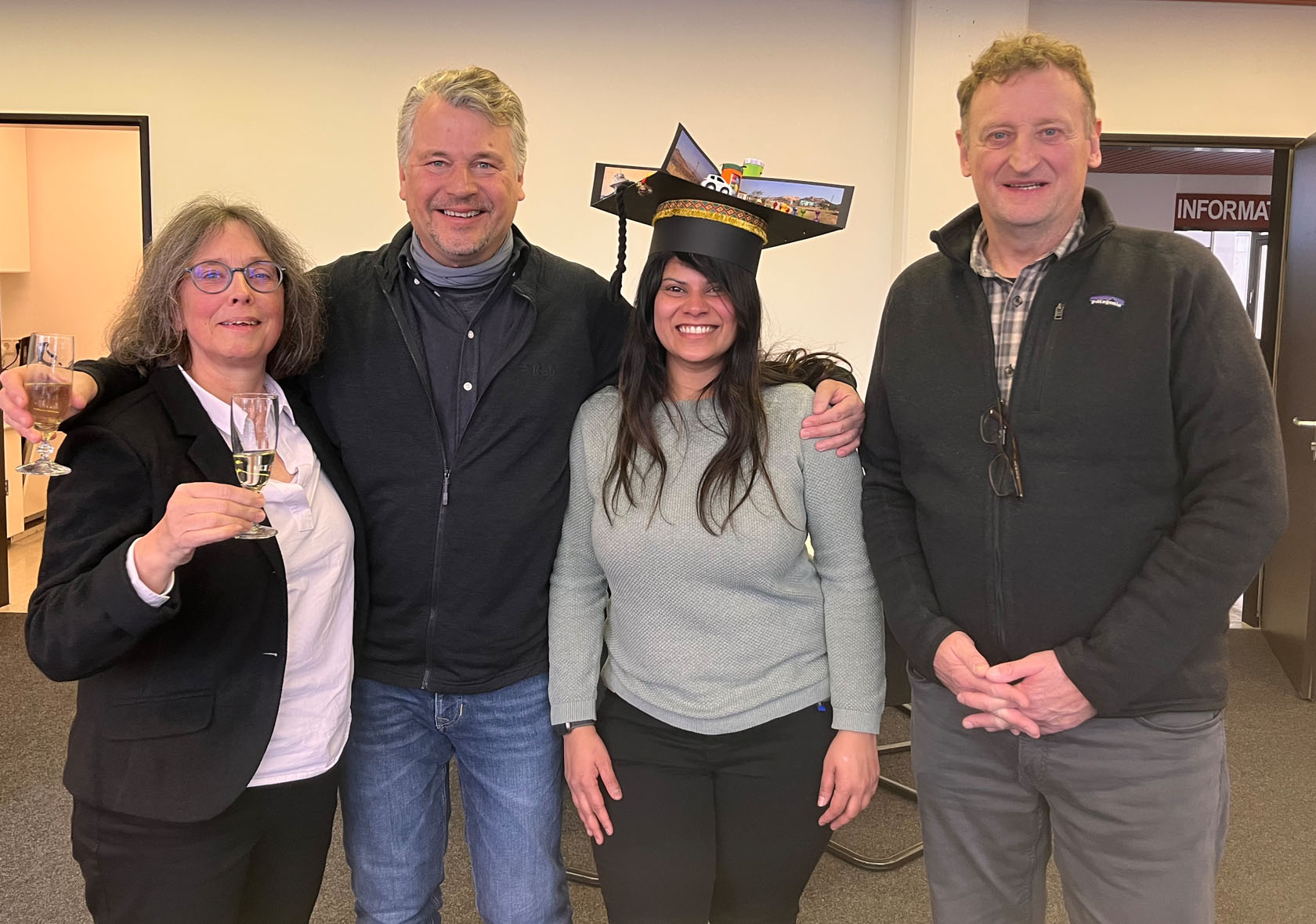
Deepthi Patric after the defence of her PhD thesis together with her Thesis Advisory Committee (Prof. Fr. Martin Kappas to the right, Prof. Dr. Gertrud Schaab to the left and Dr. Daniel Wyss and Deepthi Patric in the middle)

Congratulations on the successful PhD defence!

In January 2022 Deepthi Patric began working on her PhD at Karlsruhe University of Applied Sciences, this within the WoPedyP project on “Place Dynamics and Women’s Perception – From Knowledge Coproduction to Transformative Pathways for Sustaining Peri-urban Livelihoods in Mankweng“, funded by BMFTR (formerly BMBF) and DSI/NRF (on the South African side). With the admission as a PhD student to the GAUSS Graduation School of the Georg-August-Universität Göttingen the race against time started. On the 8th of January 2026 Ms Deepthi Patric now successfully defended her cooperatively supervised PhD thesis in Göttingen and is as such released from spending further time on her thesis.


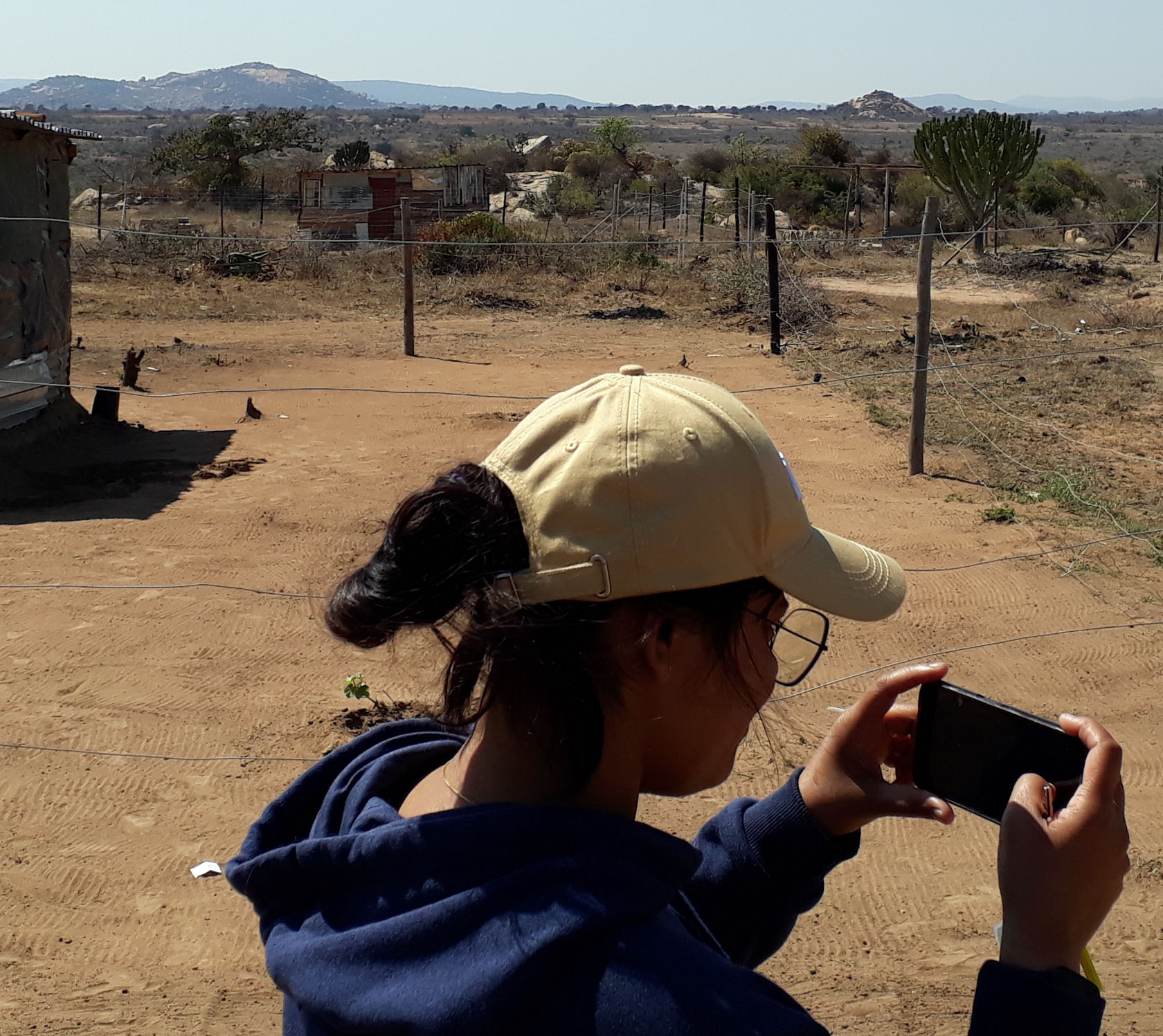
The title of her PhD thesis reads „Analyzing Peri-Urbanization and Land-Based Livelihoods in Mankweng, Limpopo (South Africa): A Remote Sensing Approach towards a Strategic Framework for Sustainable Livelihoods“. The work involved combines four tasks: 1. Ground Truthing which enabled the interpretation of the very-high-resolution satellite imagery as well as the building of understanding on how land-based livelihood functions in the study area. 2. The object-based image analysis (OBIA) by means of eCognition of the peri-urban part of the township Mankweng and surroundings. 3. The derivation of a land-based livelihood typology with the help of landscape metrics based on the satellite image classification. And 4. the development of scenarios and possible adaptive transformation pathways for the study area using the results of participatory stakeholder workshops (attended by women and institutional actors).

Being originally from India, Deepthi Patric mastered the many challenges well. Although she had spent a few months in Germany already, a lot was new to her: Karlsruhe, aiming at a German ‘Doktortitel’, the study area in South Africa, cooperation with the project partners from University of Pretoria and University of Limpopo and as well as communication with the local people. Arriving with a lot of motivation and a solid training as a geographer she surely conquered Mankweng with a wide heart. A bigger challenge was the tedious work on the WorldView 3 satellite imagery covering 200 km² in 0.3 m resolution after pan-sharpening. Here she introduced a new semi-automatic approach and managed to distinguish between 38 land use/cover (LUC) classes, which readily revealed differences across the peri-urban landscape. The LUC classes built the base to derive landscape metrics which were used as proxies to infer locally relevant land-based livelihood characteristics to then finally distinguish between 14 meaningful land-based livelihood types. Not using geodata processing, contrary the final task of pathway-linked scenarios required Deepthi to combine her system knowledge on peri-urban land-based livelihood in the study area, which she had accumulated over time, in an adaptive pathway grid, interleaving it then with the many actions for transformation as pointed out during the stakeholder workshops. As such the PhD work is truly interdisciplinary in nature using four distinct approaches and provides solid information on a special case of a very diverse peri-urban mosaic in a former homeland area of South Africa, which is constantly changing and still expanding. The outcome could be useful in the urgently needed planning and development of neighbourhoods in Mankweng and environs.

Overall, Deepthi Patric’s work forms a major part of the WoPedyP project results, of which she can be as proud as of achieving the Dr.-title. While the certificate is just a formality – a matter of a few weeks, publishing the results in scientific journals is still pending. Certainly, working on a PhD as tightly knitted into an integrated project framework can be challenging at times, but it also brings along joint excitement, success and fun. The WoPedyP team thanks Deepthi for having taken a big part in all of that.
Imagevideo IMP - unser Portfolio

Externer Inhalt

Um diesen Inhalt zu verwenden (Quelle: www.xyz.de), klicken Sie bitte auf Akzeptieren. Wir möchten Sie darauf hinweisen, dass durch die Annahme dieser IFrames Daten an Dritte übertragen oder Cookies gespeichert werden könnten.

Weitere Informationen finden Sie in unserer Datenschutzerklärung.

So finden Sie uns

Besucheradresse
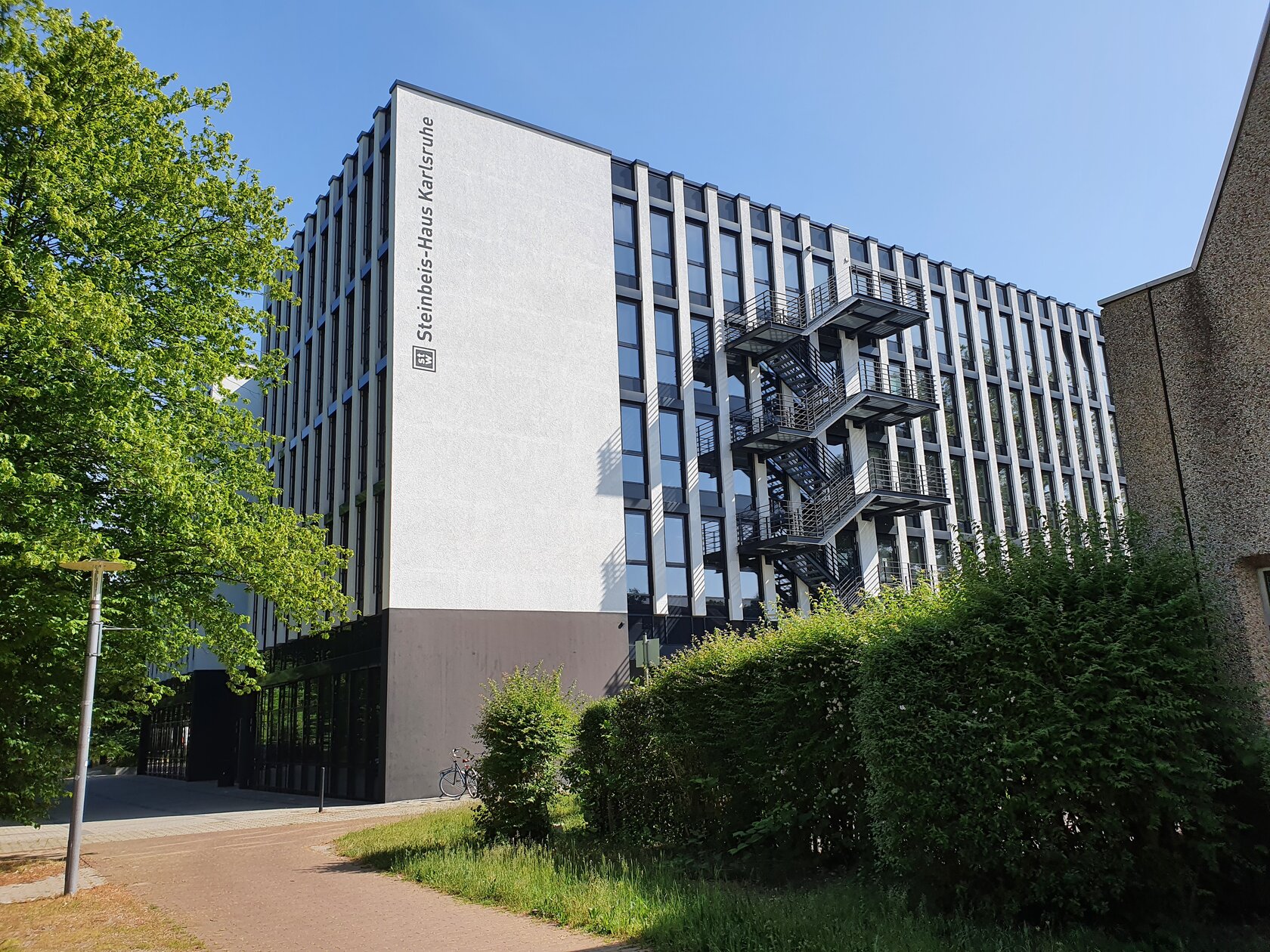
Steinbeishaus (Geb. SH), 2. OG
Willy-Andreas-Allee 19
76131 Karlsruhe

Postanschrift
Hochschule Karlsruhe
Institute of Materials and Processes
Moltkestr. 30
76133 Karlsruhe

Lageplan und Standorte

Projekte Publikationen Team Studentische Forschung Ausstattung