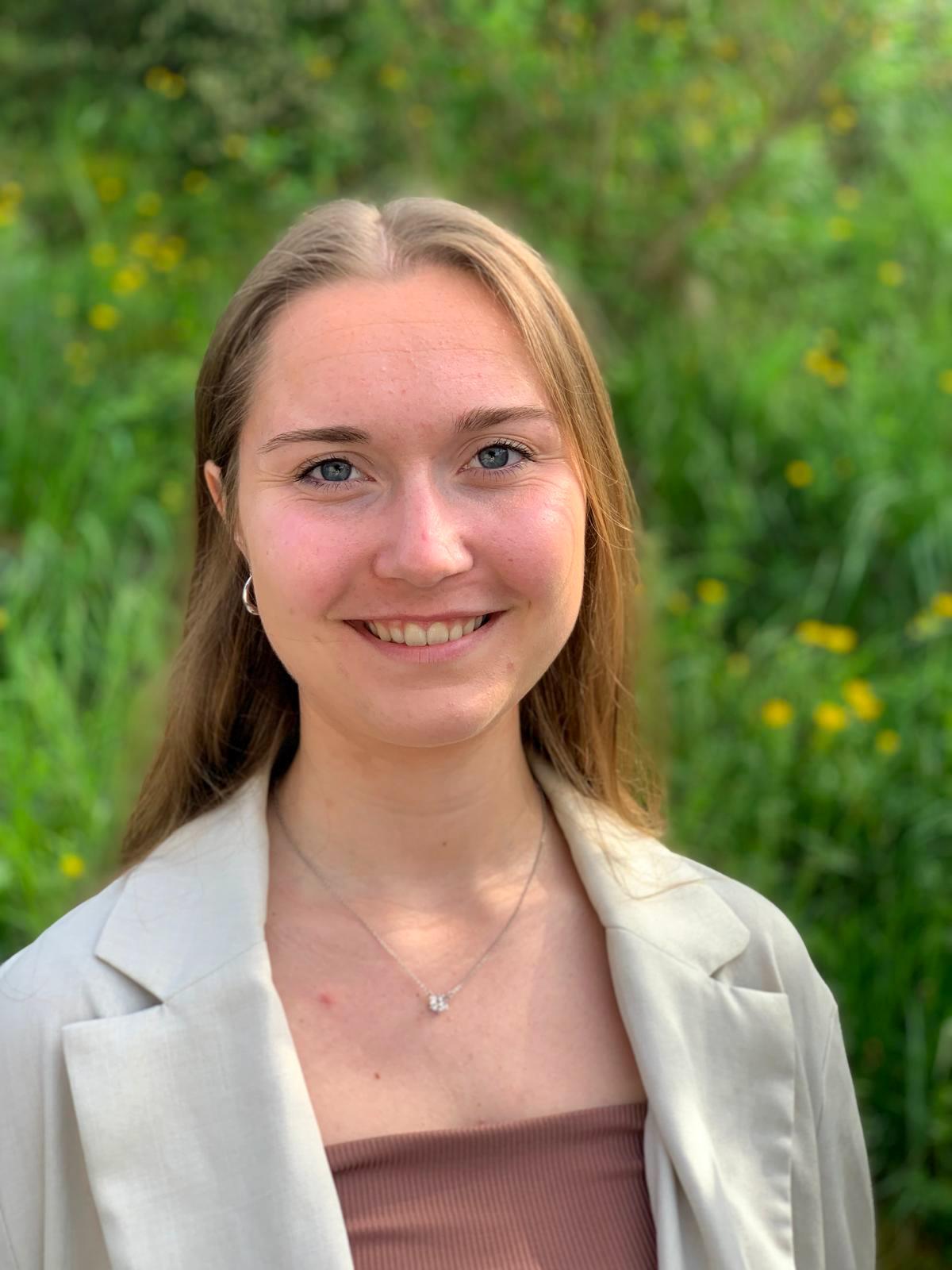
Lena Hübner - one of our best graduates
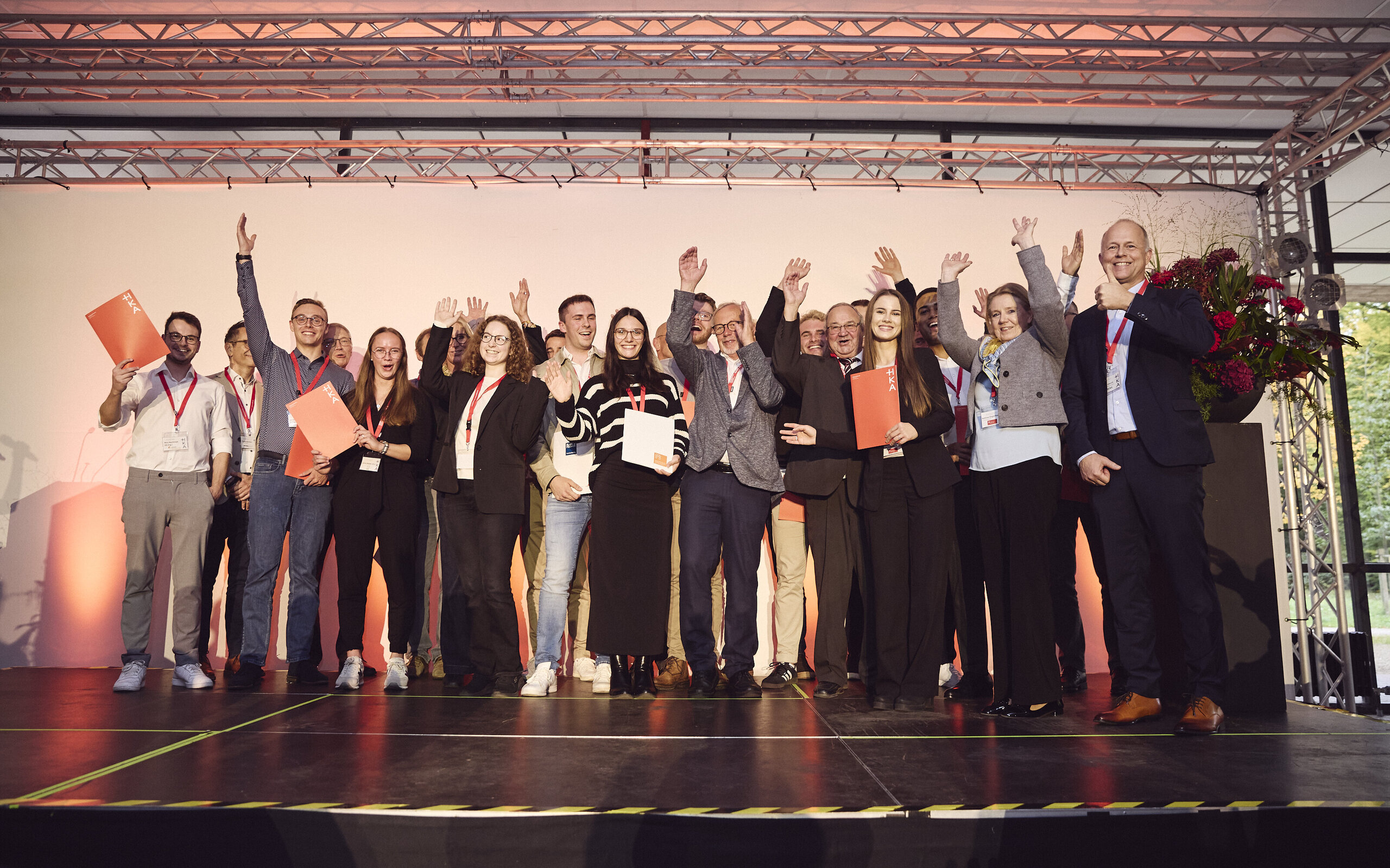
Lena Hübner studied electrical engineering and information technology with us , specializing in energy technology and renewable energies. Her outstanding bachelor's thesis, which she wrote at Bosch, was awarded the City of Karlsruhe Prize at our annual academic celebration in fall 2025.
HKA: Ms. Hübner, what did you focus on in your bachelor's thesis?
Lena Hübner (LH): I developed an electric motor with a so-called follower pole rotor. The motor was a permanent-magnet synchronous machine. Put simply, such a motor contains a large number of magnets that are attached to the rotor in alternating polarity. The problem is that the permanent magnets are pretty much the most expensive components on such a motor. It is therefore interesting to investigate the extent to which savings can be made here. In the following-pole rotor I developed, every second magnet was removed and replaced with iron. The remaining magnets were all magnetized in the same direction and the electromagnetic field polarizes the iron in the opposite direction, creating torque.
That sounds good if it saves material. But does the motor have the same performance as the original motor, especially if you only install half as many magnets?
(LH): If you remove half of the magnets, you initially assume that the torque is also half as great. But that was not the case. The follower pole rotor with unchanged geometry was able to achieve around 80 % of the torque of the original rotor. That was an interesting finding. Because from that point on, it was all about optimization. I adapted the shape of the magnets a little more and also increased their height and width. As a result, I was even able to achieve the same torque as the original motor. Of course, a little more than half of the magnet material was used, but it was still possible to reduce the overall torque. However, it has to be said that the motor runs a little less smoothly because variables such as the cogging torque and the torque ripple have changed and the magnetic field is no longer as fluid.
After completing your Bachelor's degree, you started a Master's program at KIT. How would you say this course differs from studying at the HKA?
(LH): At the HKA, the atmosphere was definitely more informal. You had a much closer relationship with the professors. The professors knew you by name, which is often different at KIT because the courses are usually larger here, so everything is a bit more distant. The lectures are perhaps also a bit more theoretical, at the HKA I had more practical labs. But I think it was the right decision for me and my Master's degree, because I just wanted to see something else. I would do the same again, by the way.
So you would do the Bachelor's degree at HKA again and the Master's degree at KIT, why do you think this is a good combination?
(LH): It was particularly important for me to have practical experience during my Bachelor's degree. I started my studies straight after school and had no training. I therefore found it good that I was able to gain practical experience during my studies through the many exercises in the labs. I also wanted to do something mathematical after school, but in an applied way. And electrical engineering was like applied mathematics for me. I enjoyed that. In my Master's degree, I wanted to deepen my theoretical knowledge, which I can now do at KIT.
You come from the region around Bad Mergentheim, so in principle other cities could have been considered for your studies, why did you choose the HKA and Karlsruhe?
(LH): The university has a very good reputation. I looked at the websites at the time and then decided on HKA. I already knew a few people who were also in Karlsruhe, which made it a bit easier to get started. Karlsruhe is also a student city. When you walk through the Schlosspark, you almost only see young people, and as a student you definitely feel at home there.
Thank you very much for this interview!