Last Mile City Lab – Test Environments for Urban Logistics
Online retail, delivery services, and new mobility options are transforming everyday life in cities. More and more goods must be transported to customers reliably, in a space-efficient manner, and with low emissions. At the same time, road space is limited. Pedestrians, cyclists, public transportation, delivery vehicles, and residents are all competing for the same space. Urban logistics therefore faces a critical challenge. New solutions must not only work from a technical standpoint; they must also be safe, widely accepted, economically viable, and capable of being integrated into real urban neighborhoods. The “Last Mile City Lab – Test Beds for Urban Logistics” project creates technology-neutral real-world laboratory environments for this purpose. There, academia, industry, local governments, and startups can develop, test, and evaluate new concepts for the last mile at an early stage.
The Last Mile City Lab develops technology-neutral real-world testing environments for safe, efficient, and sustainable last-mile logistics solutions
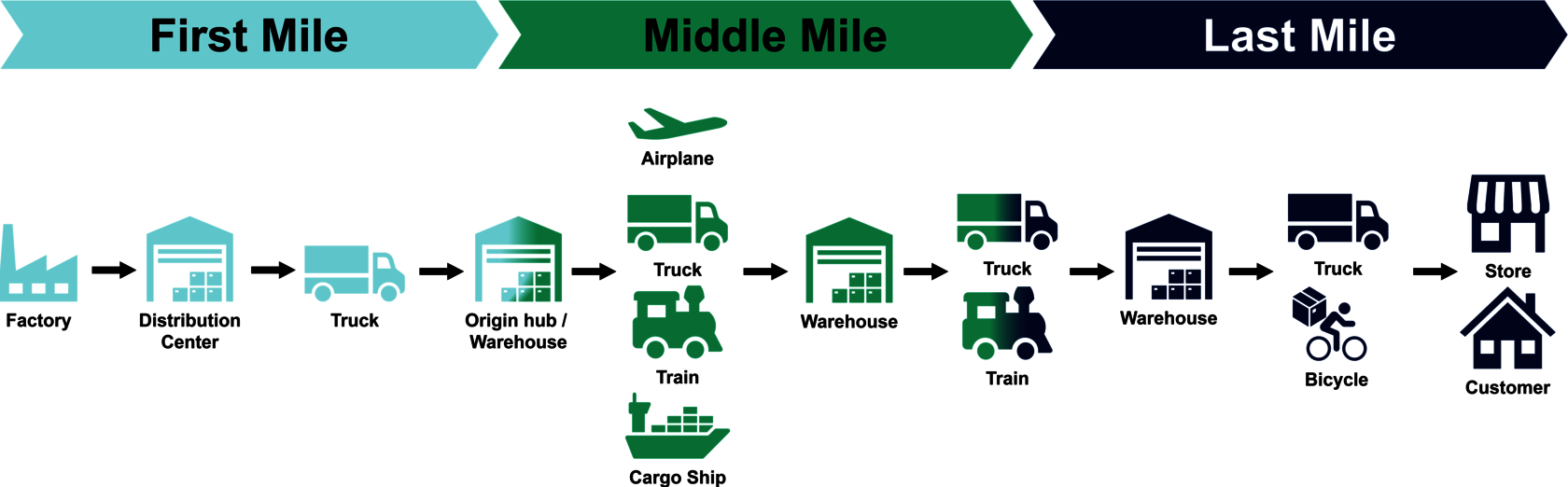
The “Last Mile City Lab – Test Environments for urban logistics” project focuses on new solutions for the last mile. This refers to the segment where goods, packages, or services are delivered directly to people in the city. This area is particularly challenging. Delivery vehicles encounter pedestrians, cyclists, parked cars, narrow streets, and changing traffic conditions. For new logistics systems to be deployed in this environment, they must not only be efficient and climate-friendly; they must also be safe, reliable, and socially acceptable.

Overall Objectives
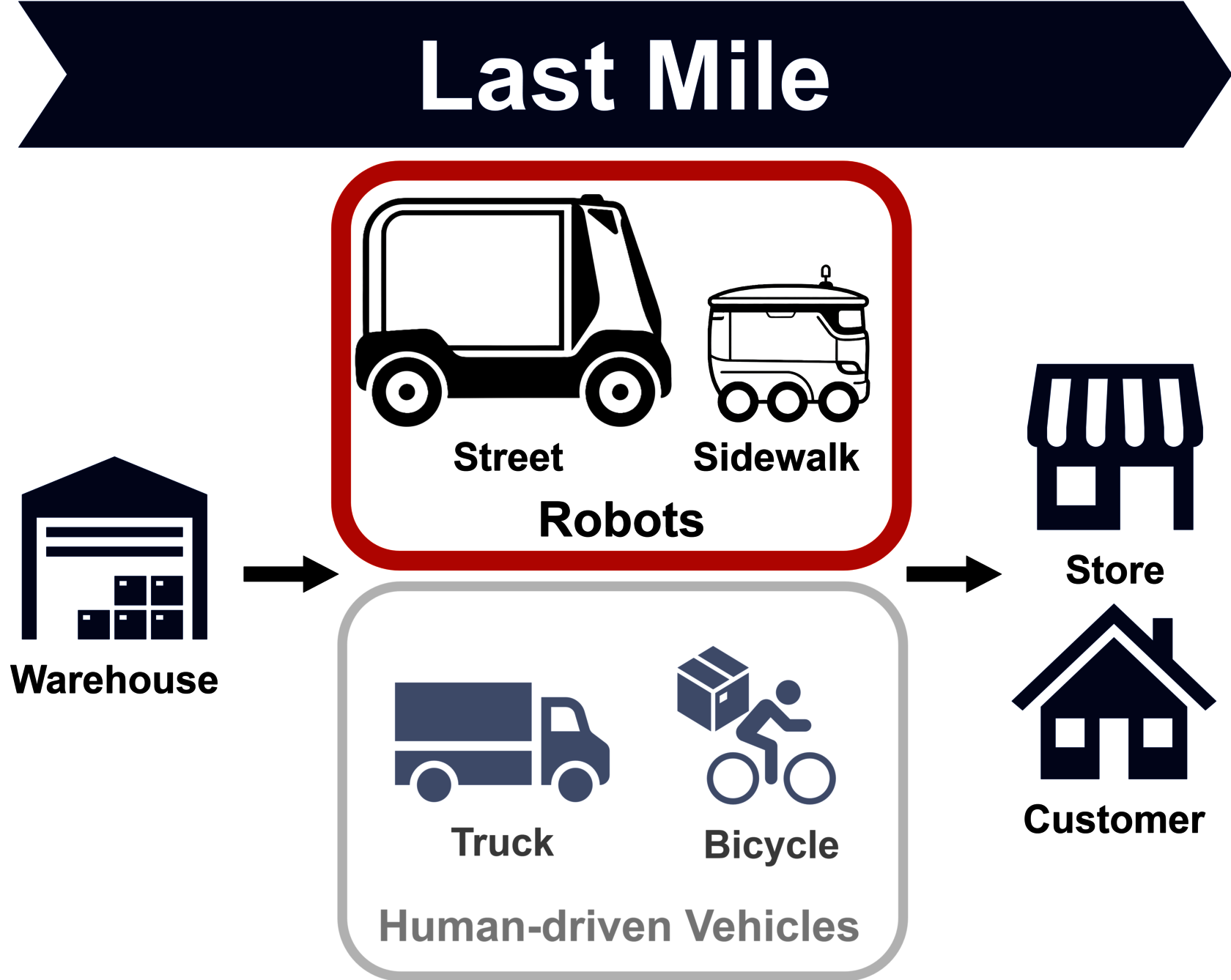
One focus of the project is therefore on the use of highly automated road and sidewalk robots for last-mile delivery. In the future, these robots are intended to complement and expand the existing delivery infrastructure of trucks and bicycle couriers. Highly automated delivery robots use various sensors to map their surroundings. Based on this data, they detect obstacles, other road users, and possible routes. This so-called environmental perception is a key requirement for autonomous driving decisions. If the perception capabilities of such a system are disrupted, this can have direct implications for traffic safety, reliability, and public acceptance.
Research activities of the IEEM at the HKA
In the partial project conducted by Karlsruhe University of Applied Sciences, this issue is examined from the perspective of information security. The focus is on cybersecurity risks that may arise from targeted attacks on sensor systems and the subsequent data processing. The study examines various environmental attacks on sensors. These attacks may affect individual sensors, but they can also impact multiple sensors simultaneously. This allows researchers to investigate how robust the systems remain when their sensing capabilities are deliberately manipulated or disrupted.
A simulation environment is being set up for these studies. It enables reproducible security scenarios. This allows various attack scenarios to be systematically tested and compared with one another. The simulation makes it possible to recreate critical situations in a controlled manner without endangering real road users. At the same time, the effects on sensor perception, data fusion, and the resulting driving decisions can be analyzed more precisely.
Another component of the project is the investigation of the underlying data fusion. Modern autonomous systems typically use multiple sensors simultaneously. The information from these sensors is combined to generate the most reliable picture possible of the environment. The project analyzes how security attacks affect this data fusion. The evaluation will be conducted both analytically and using data-driven methods. The goal is to gain a better understanding of technical vulnerabilities, misinterpretations, and potential impacts on AI-based driving decisions.
The goal is to gain scientific insights into the robustness of AI systems for autonomous driving decisions in the last mile. These insights are intended to help make future logistics robots safer and more trustworthy. The project thus brings together urban logistics, traffic safety, public acceptance, and cybersecurity. It contributes not only to the technical development of new technologies but also to their responsible integration into everyday urban life.


Key data
Karlsruhe
Institute of Energy Efficient Mobility (IEEM)
Moltkestr. 30
76133 Karlsruhe
Post >
Institute of Energy Efficient Mobility (IEEM)
Postfach 2440
76012 Karlsruhe