How can university operations be made more environmentally friendly?
Research project at HKA for energy- and CO₂-optimized laboratory and IT operations at universities
November 26, 2025
Universities have high CO2 emissions due to their energy-intensive infrastructure. They operate facilities such as data centers and laboratories that consume significantly more energy than normal offices, for example. Although energy-saving measures are already recommended and implemented at universities, IT infrastructures and energy-intensive laboratories have so far only been considered to a limited extent.
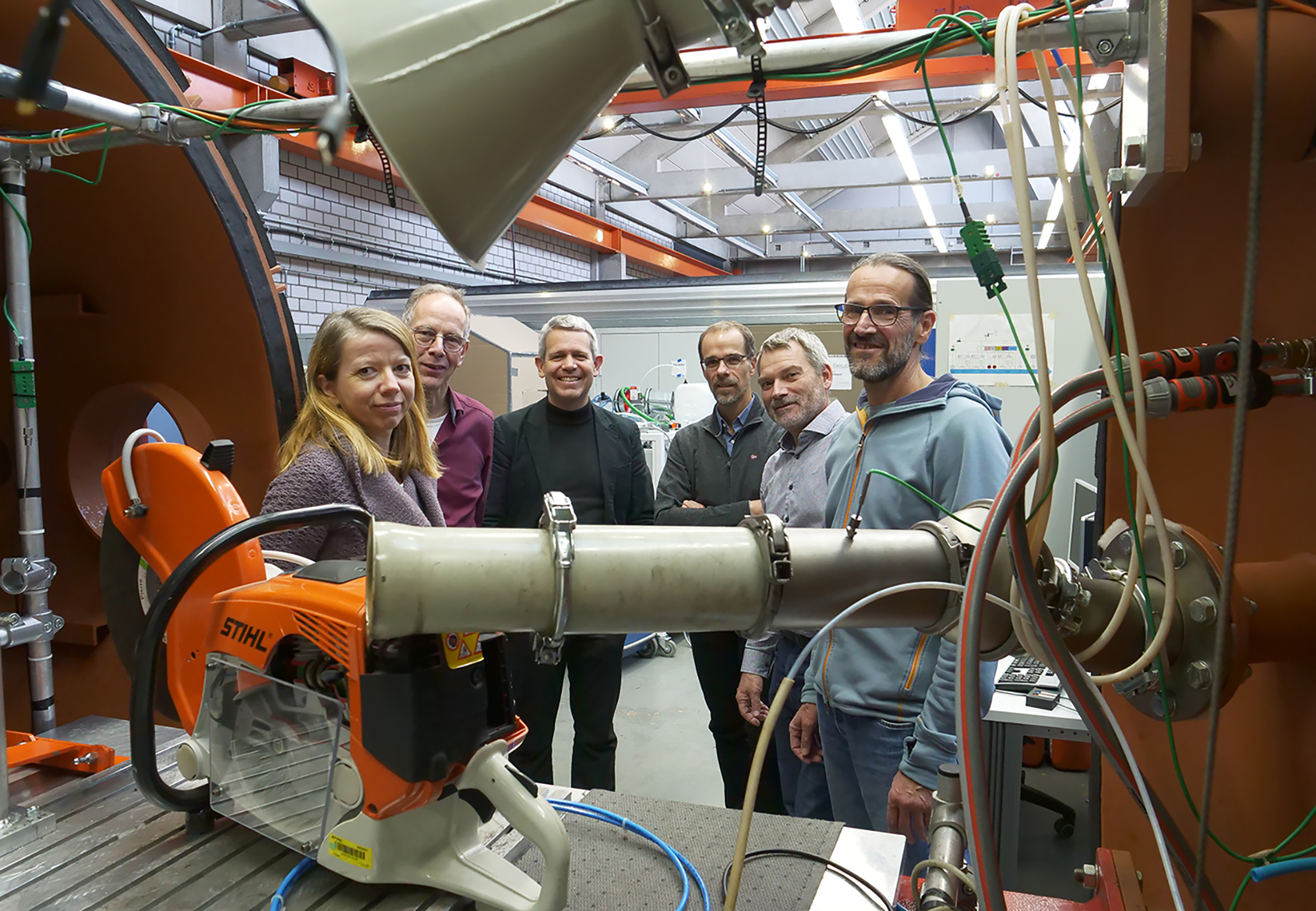
The project team at Karlsruhe University of Applied Sciences (HKA), led by Professor Dr. Christine Preisach from the Faculty of Computer Science and Business Information Systems, wants to close this gap. It wants to develop a new system that uses artificial intelligence (AI) to better plan and control the operation of these facilities. The aim is to reduce energy consumption and increase the proportion of renewable energy. To this end, AI will be used to develop forecasting models that can precisely estimate the energy requirements and usage of the facilities and then compare them with the availability of renewable energy.
The project also promotes cooperation between universities in order to jointly optimize the use of resources. The results should not only help universities, but also other companies to operate their energy-intensive infrastructures in a more efficient and environmentally friendly way. This can reduce CO₂ emissions and make the entire digitalization process more resource-efficient. "We hope that this new approach will enable us to reduce CO₂ emissions by 10-20%," says project manager Prof. Dr. Christine Preisach, “that would be a great success. And it will also be possible to further reduce the energy requirements of the AI used in the future, for example through advances in algorithms and hardware.”
The research project is being funded for three years by the Carl Zeiss Foundation with almost 1.5 million euros.