Hochschule Karlsruhe Hochschule Karlsruhe - University of Applied Sciences
  • hochfünf | wohnen

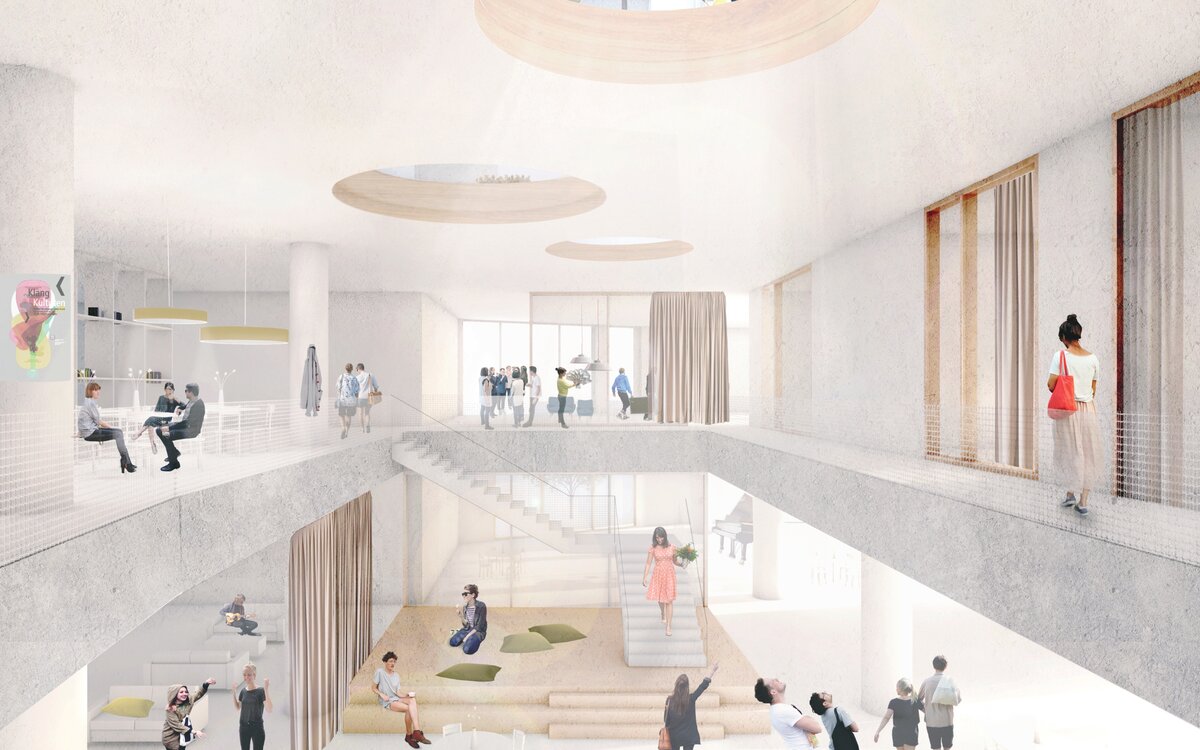
    The topic of housing is multifaceted. One way to approach it is to get a first impression through statistics. Another option is to look at our students’ projects, which explore the question “How do we want to live?” in a wide variety of ways.

    Here is the 21st issue of the Architecture program’s semester magazine. For those who don’t yet know how our magazine’s name, hochfünf, came about, here’s the answer: Of course, our students aim high and diligently practice in the second and third dimensions. The only missing piece of information is that architecture at Karlsruhe University of Applied Sciences is studied high up on the 5th floor of Building B on campus.

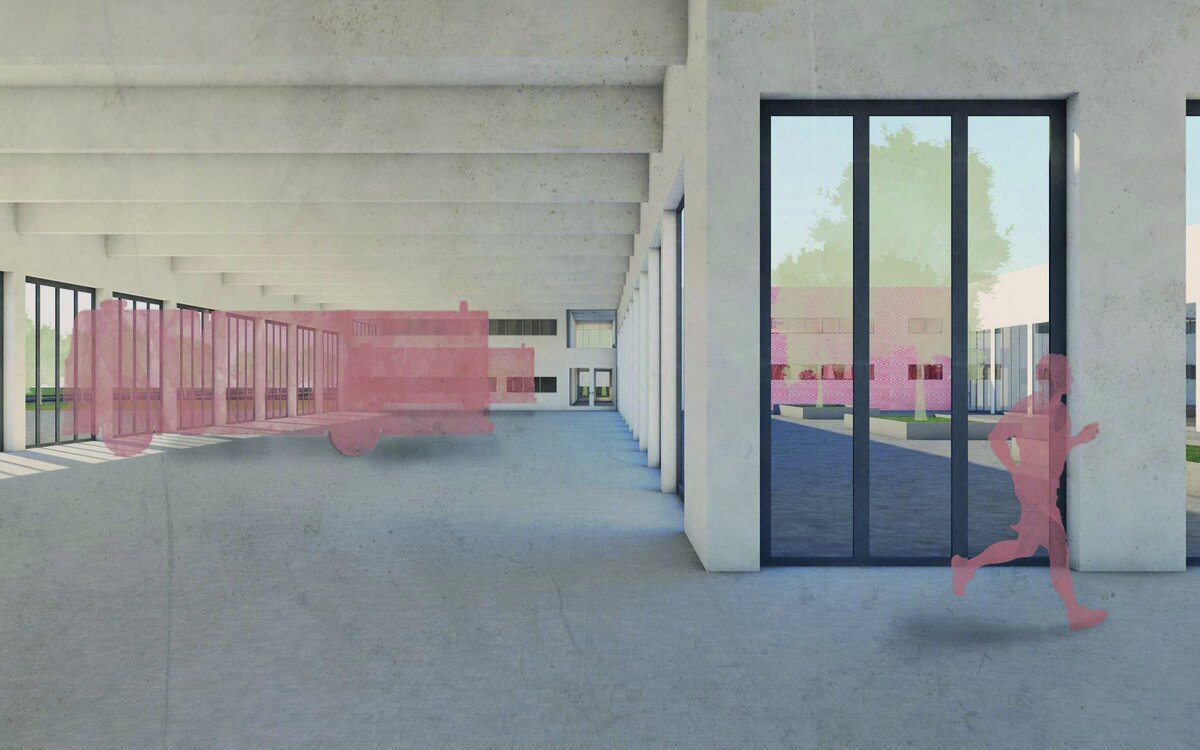
    Participating in student competitions, such as the JOANES Foundation Prize or Europan, is a great opportunity for students to test and expand their knowledge. Winning can also serve as a springboard into a career. You can find details in the respective articles. In this issue, we also report again on several examples that clearly demonstrate that, as aspiring architects, there are excellent opportunities to gain insights and experience abroad.

    Enjoy reading!

    Open issue: PDF
  • hochfünf | balance

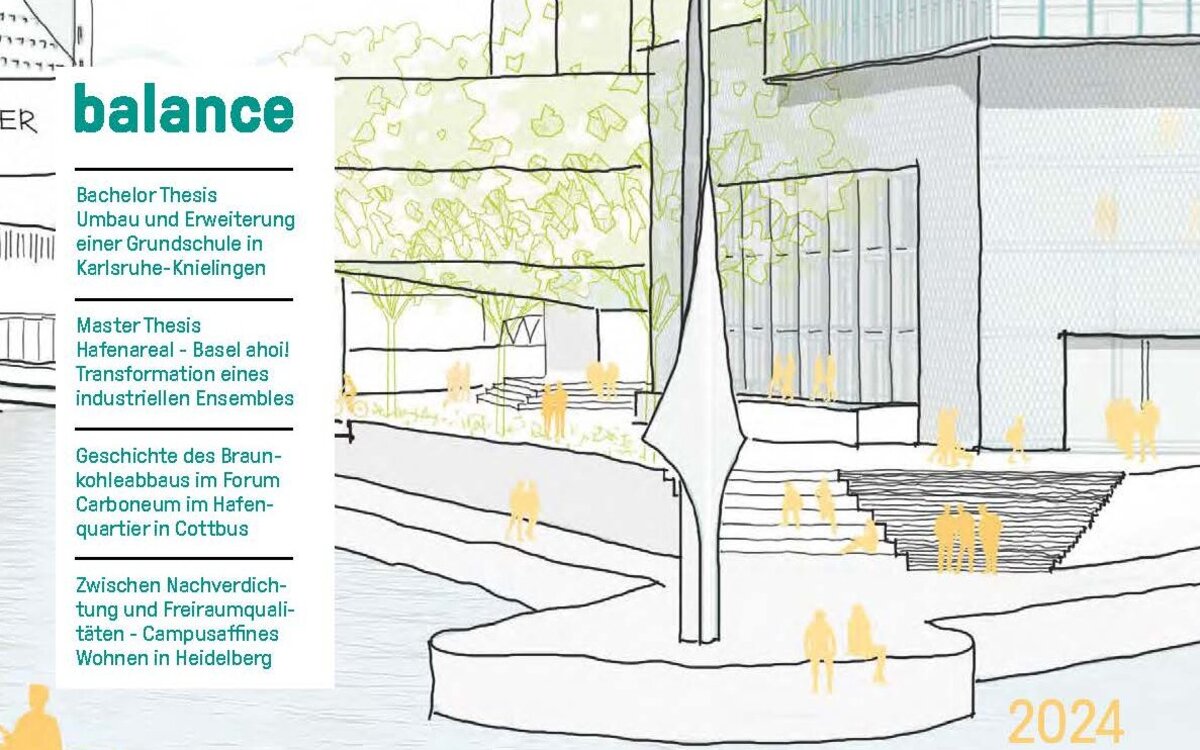
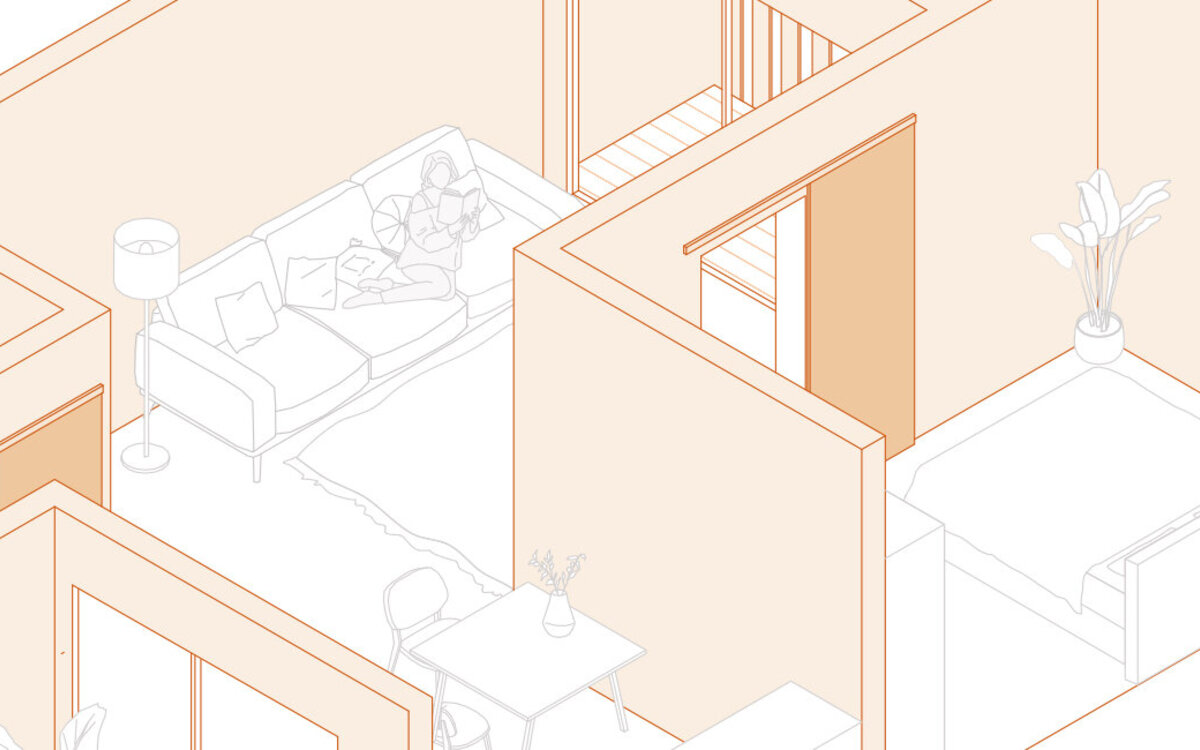
    What does balance mean to you? Do you feel balanced? Are you in balance with your surroundings? Are your life and work in balance? And when it comes to architecture and building culture: Are buildings in balance with their surroundings? Are the exterior and interior in balance? Are sustainability and construction in balance? These were all questions we asked ourselves while putting together this issue, but we also posed them to the selected projects.

    Master’s theses are increasingly focused on healthy spaces, so it seems that something is out of balance here, and the students wish to restore that balance through their designs. We can also observe this trend in the advanced design projects: these address questions such as how buildings can be well integrated into their surroundings, how living and working can be brought into balance, or how open spaces can be enhanced. Studies and leisure time must also be in balance, which is why there are inspiring articles on trips to Thailand, Nepal, and Denmark. And to ensure that the body is in balance and healthy eating isn’t neglected, there are quick recipes that can be made even during stressful submission periods.

    Enjoy reading!

    Open issue: PDF

  • hochfünf INNEN

    The 19th issue of our study program magazine is here! After focusing on open space in the last issue, we are now turning our attention INSIDE. Inside is, of course, broadly defined and ranges from articles on the search for happiness to the documentation of in-depth designs for living in rural areas. And if we really want to stay inside, there are tips for good books and films. Enjoy reading the new hochfünf!

    Open issue: PDF​​​​​​​

  • SMAKH becomes hochfünf

    hochfünf is now the new name, in reference to our location on campus.

    We took around a year to revise the appearance and look for a new name - always together with the students!
    The process began in the summer semester of 2021 with a group of eight very committed students. In small groups, they developed the type area adapted to the new format, rules for the typography, the new title page and color concepts for the upcoming issues. There were long discussions about seemingly trivial details such as font sizes and the placement of page numbers - but ultimately it is precisely these details that make a magazine more than just a collection of well-designed individual articles.
    At the end of the semester, we had a set of rules and templates with which we dared to do a first “test round”. This test round took place in the winter semester 21/22. Together with other participants in the elective subject, we tested the resulting guidelines and set about fine-tuning them. You can see the result here.

    We hope you enjoy exploring and discovering our “new” magazine hochfünf!

    Open issue: PDF

  • SMAKH 17

    In the winter semester 20/21, the university was unfortunately unable to return to its usual face-to-face operations. After a short hybrid phase at the beginning of the semester - which was a valuable time for first-semester students in particular - all courses were held online again. For students and lecturers alike, this meant returning to their desks at home and spending a lot of time at home. The main topic of this SMAKH was therefore obvious: housing. We interpreted the topic of “living” broadly when selecting the contributions. From the very small scale - living in a tiny house - to the very large - designs for a 4th semester housing estate - everything is included.

    Open issue: PDF


  • [Translate to English:] grafisches Titelbild in verschiedenen Rottönen

    SMAKH Themenheft Leere

    Even SMAKH could not simply carry on as before due to the coronavirus. So what to do? The thematic bracket of “emptiness” provided the starting point. The result is an exciting themed issue that will hopefully provide plenty of inspiration and food for thought.

    Open issue: PDF

  • SMAKH 16

    The sixteenth issue of SMAKH focuses on the topic of "future viability". We report, for example, on the  developments on our university campus, an article on career entry deals with the first period after graduation, and a travel report on a stay at the La Tourette monastery provides a welcome counterpoint to the general trend of "faster, more, always and everywhere." 

    Open issue: PDF

  • SMAKH 15

    The fifteenth issue of the SMAKH focuses on the topic of cooperation. The various forms of cooperation range from interdisciplinary tasks within the degree program and their supervision by teachers from different disciplines, to interdisciplinary projects and events within the Faculty of Architecture and Civil Engineering, to design projects and events with external companies and institutions.

    Open issue: PDF