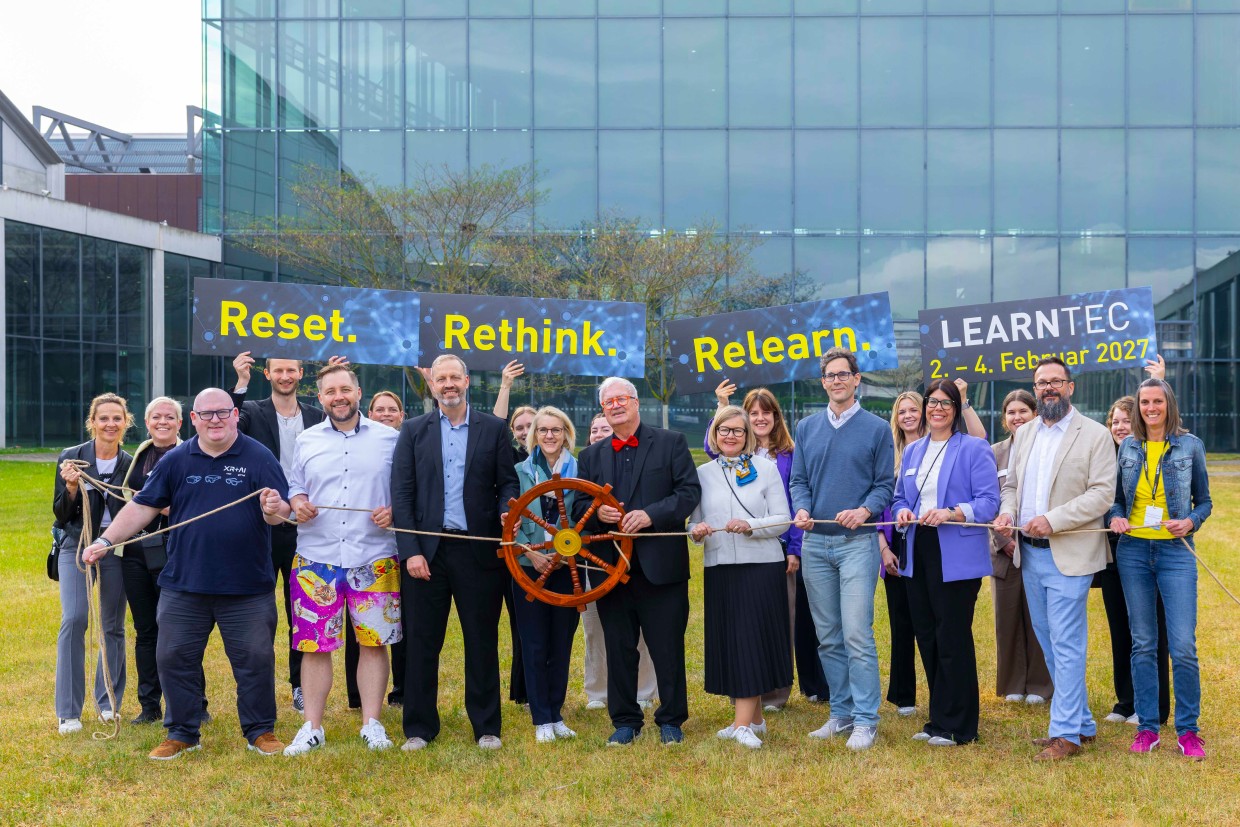
LEARNTEC 2026 took place in Karlsruhe from May 5 to 7, 2026. The convention is regarded as Europe's leading event for digital education in schools, universities and the workplace and once again brought together stakeholders from education, science, business and technology. A particular focus in 2026 was on artificial intelligence, adaptive learning systems and digital sovereignty.
The Institute for Intelligent Interaction and Immersive Experience (IIIX) was represented with several contributions. In addition to a workshop and a presentation, IIIX employees also acted as moderators in the congress program. Prof. Dr. Matthias Wölfel, Director of IIIX, was also a member of the LEARNTEC Scientific Advisory Board.
Agentic Learning: Rethinking learning with AI
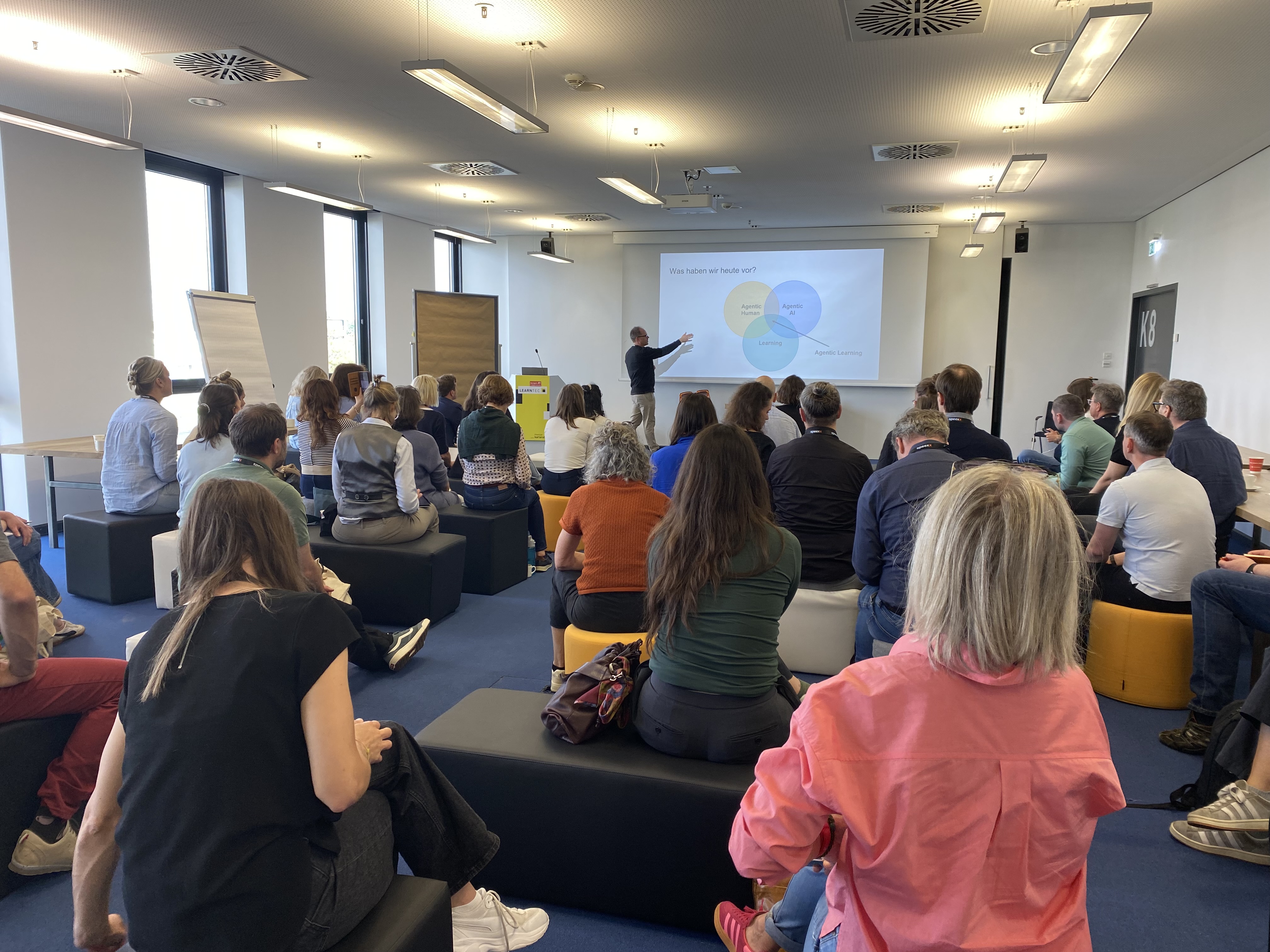
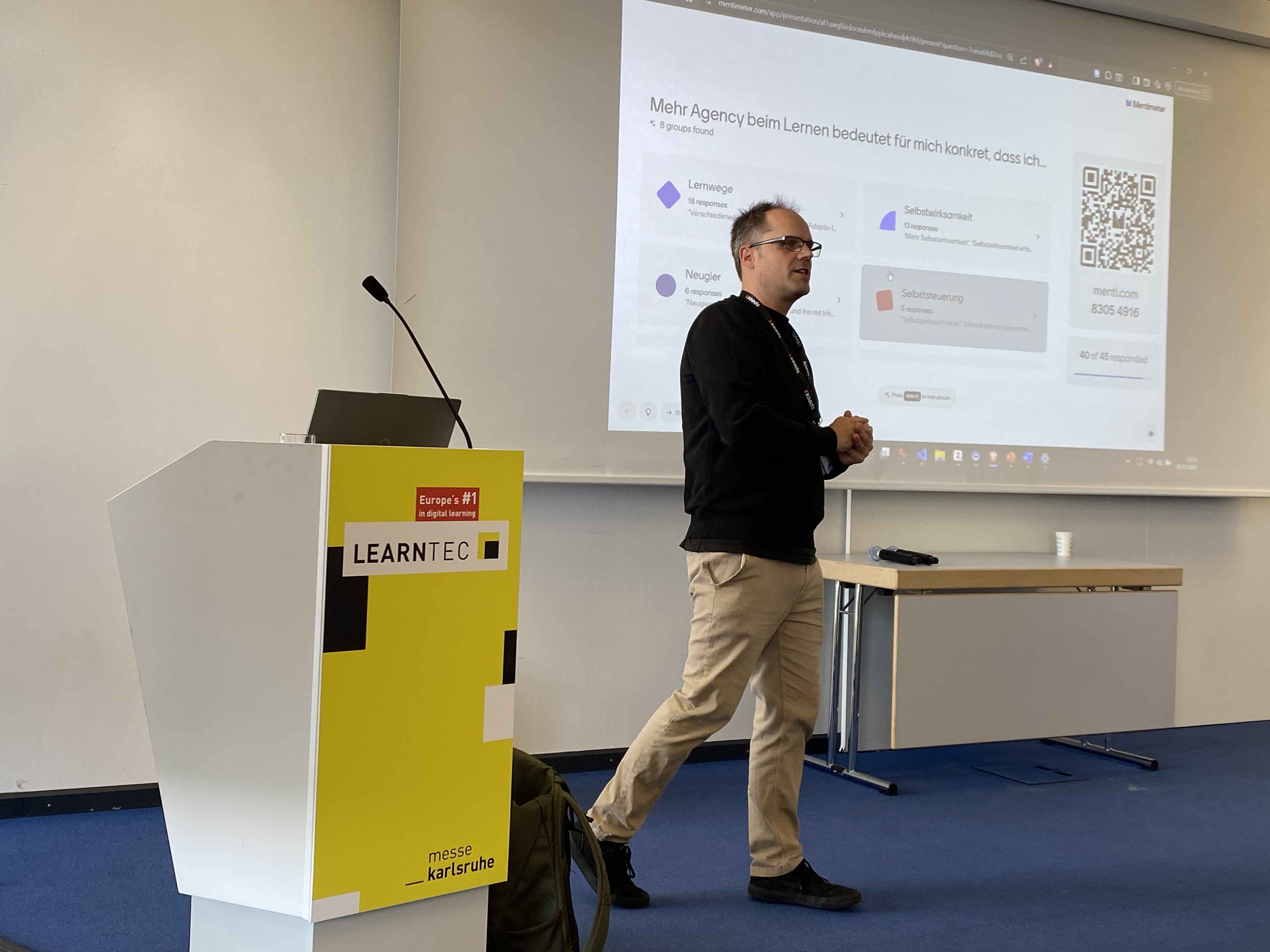
IIIX employee Thorsten Zylowski organized a workshop on the topic of Agentic Learning. The workshop was very well attended and built on the content of a previous keynote on the topic. It became clear that agentic learning is currently one of the key topics of the future in the field of digital education.
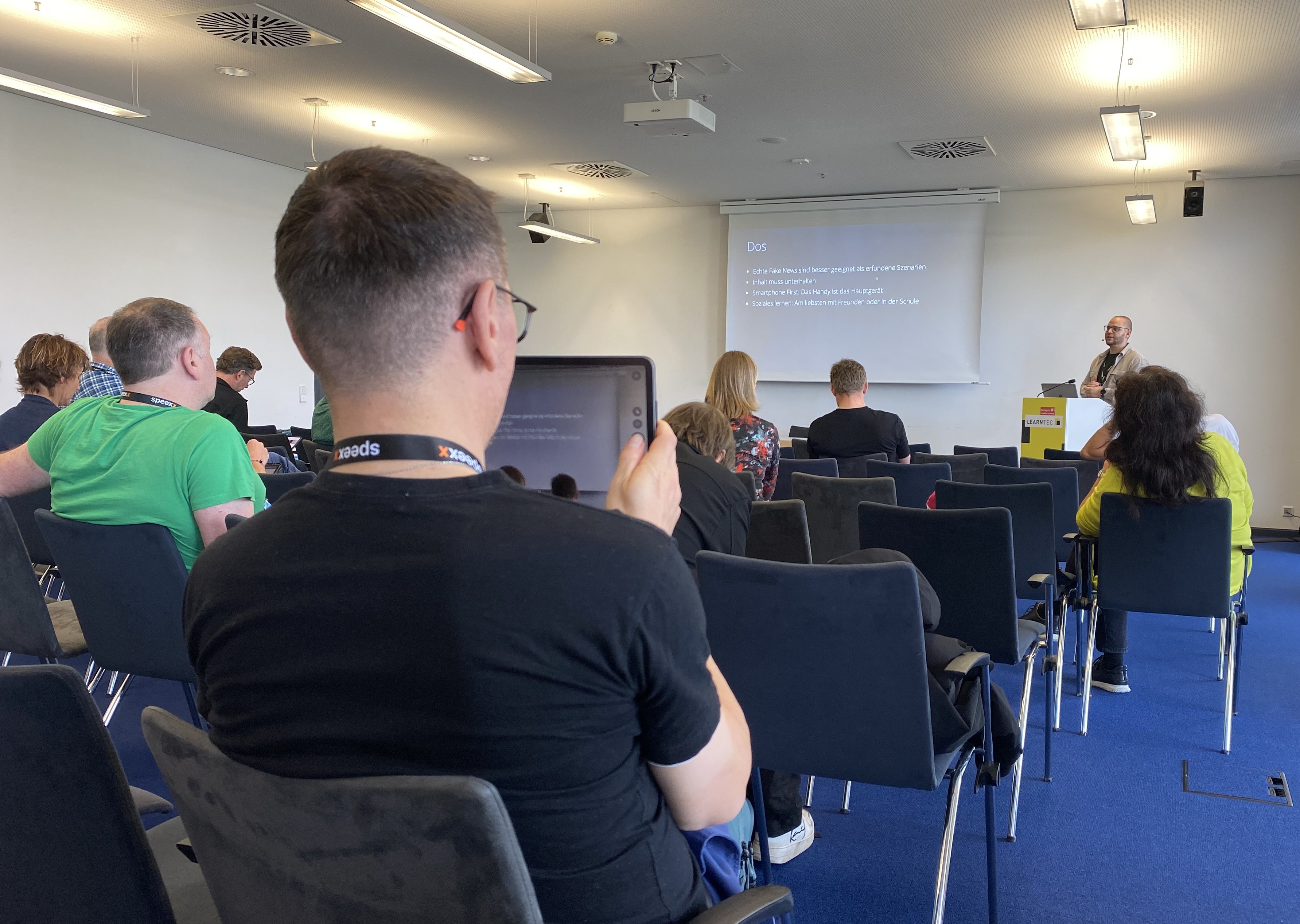
The workshop was not just about how AI agents can learn themselves. Rather, the focus was on the question of how AI can support people in shaping their own learning processes in a more active, reflective and self-determined way. Participants were able to relate agentic learning to their own problem-solving strategies as well as to organizational learning processes and actively participate. The interactive approach ensured an intensive exchange and made it clear how differently the concept can be thought of in educational and work contexts. During IIIX employee Niklas Oesterle's presentation on educating young people about fake news, the audience diligently photographed the slides.
How do you reach the TikTok generation to educate them about fake news?
IIIX employee Niklas Oesterle made a further contribution with his presentation "How to reach the TikTok generation for education about fake news?". The presentation addressed a topic that was particularly visible at LEARNTEC: Disinformation, deepfakes and AI-generated content pose new challenges for educational institutions. The great interest was not only evident in the well-attended lecture, but also in the subsequent discussion, which continued beyond the actual program item. The prototypical interaction formats developed by students as part of the MuMaSens - Mündigkeit statt Manipulation research project were particularly well received. The aim of the project is to sensitize young people to disinformation - with formats that are developed together with young people. Some of these student concepts are currently still under development; in the future, they are also expected to result in Open Educational Resources (OER) .
Participation in other program items
The IIIX was also actively involved in other program items. Karl Fischer moderated the session "Knowledge, truth, reality - knowledge transfer in times of disinformation". Fiona Schmidbauer moderated the session "AI as a learning partner: man, machine and morality". In addition, Prof. Dr. Matthias Wölfel, Director of IIIX, was involved as a member of the LEARNTEC 2026 Scientific Advisory Board and thus also contributed to the technical orientation of the congress. Learntec also welcomes another member of our university, Prof. Dr. Anja Schmitz, as a new member of the Scientific Advisory Board. Prof. Dr. Peter Henning, former professor at HKA, has been an integral part of LEARNTEC for many years. As a member of the congress committee , he was actively involved in shaping the content of this year's congress and convention program.
Learning with and about technologies
The IIIX contributions at LEARNTEC 2026 made it clear that digital education today no longer just means using technologies for learning processes. It is just as important to learn about technologies: How do AI systems work? How do algorithmic recommendations, deepfakes or disinformation arise? And how can learners be empowered to use digital technologies critically, creatively and responsibly? It is precisely at this interface that IIIX's research begins. Whether agentic learning, AI-supported learning partners or education about fake news: the focus is on the question of how technological developments can be designed and communicated in such a way that they support people without taking away their power of judgment and responsibility.