Multiphysics Modeling of Geo-materials and Processes for Energy Transition and Sustainability
The research group Multiphysics Modeling of Geo-materials and Processes for Energy Transition and Sustainability computationally investigates the microscale processes in basement rocks, which are of crucial importance for the development of sustainable energy solutions. The complex interplay of physical and chemical processes in basement rocks and engineered materials is modeled, simulated and analyzed. The main research activities include:
I: Microscale modeling of multiphysical processes in underground rocks
Crystallization and dissolution
Exchange processes between the mineral and the fluid in porous rocks and open fractures have a significant impact on subsurface systems used in energy applications. These processes change the rock properties and pore geometries over time, which in turn influences the fluid behavior. Comprehensive simulation studies will investigate the complex mechanisms of mineral growth and dissolution under different geochemical conditions and rock heterogeneities, analyzing how these processes change rock properties and pore structures over time.
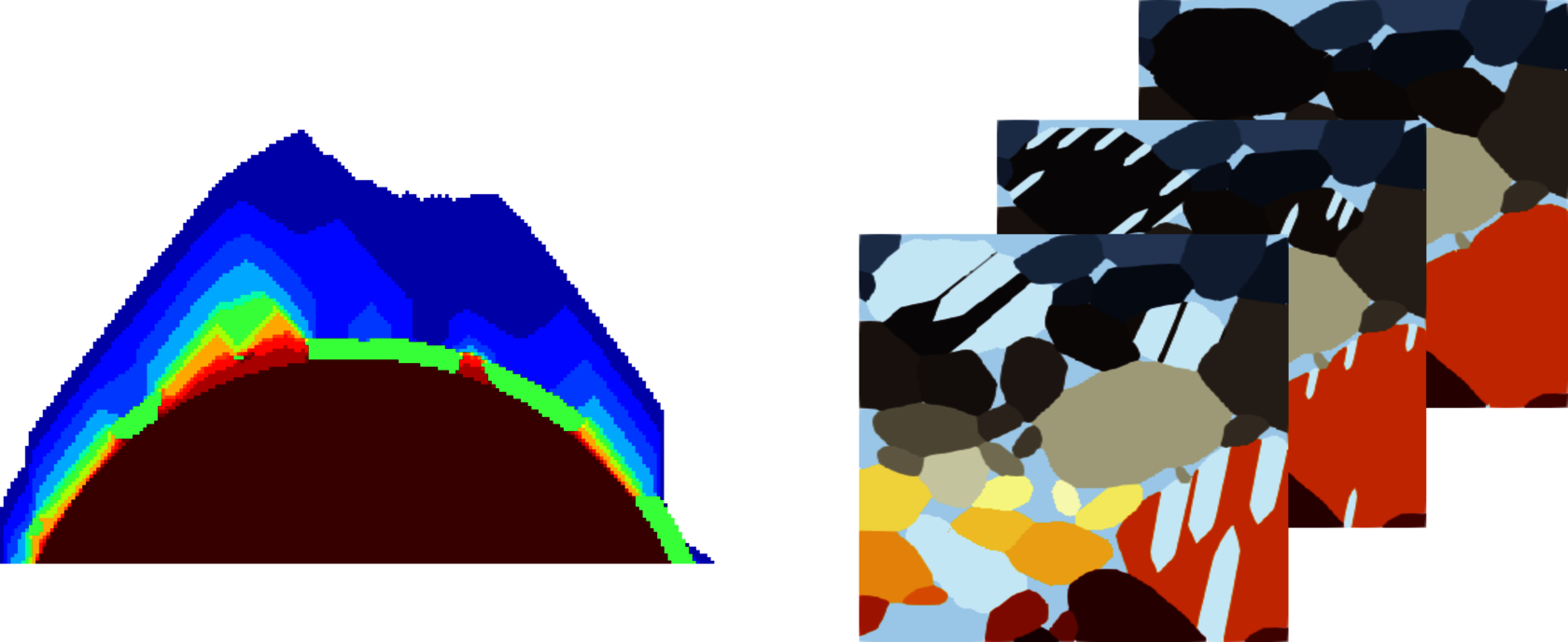
nucleation discontinuities. (Right) Etch-pitting dissolution of K-feldspar mineral in sandstone, visualized along a 2D plane.
Fluid flow and heat transfer
Complex interactions between fluid flow and heat transfer in geothermal systems with
fractures play a crucial role in energy extraction. The group's research activities focus on investigating the complex relationship between flow through fragmented rock and the associated heat extraction under different physical conditions.

during the fluid flow through an open fracture, visualized along a 2D plane.
II: Material modeling for the energy infrastructure
Corrosion
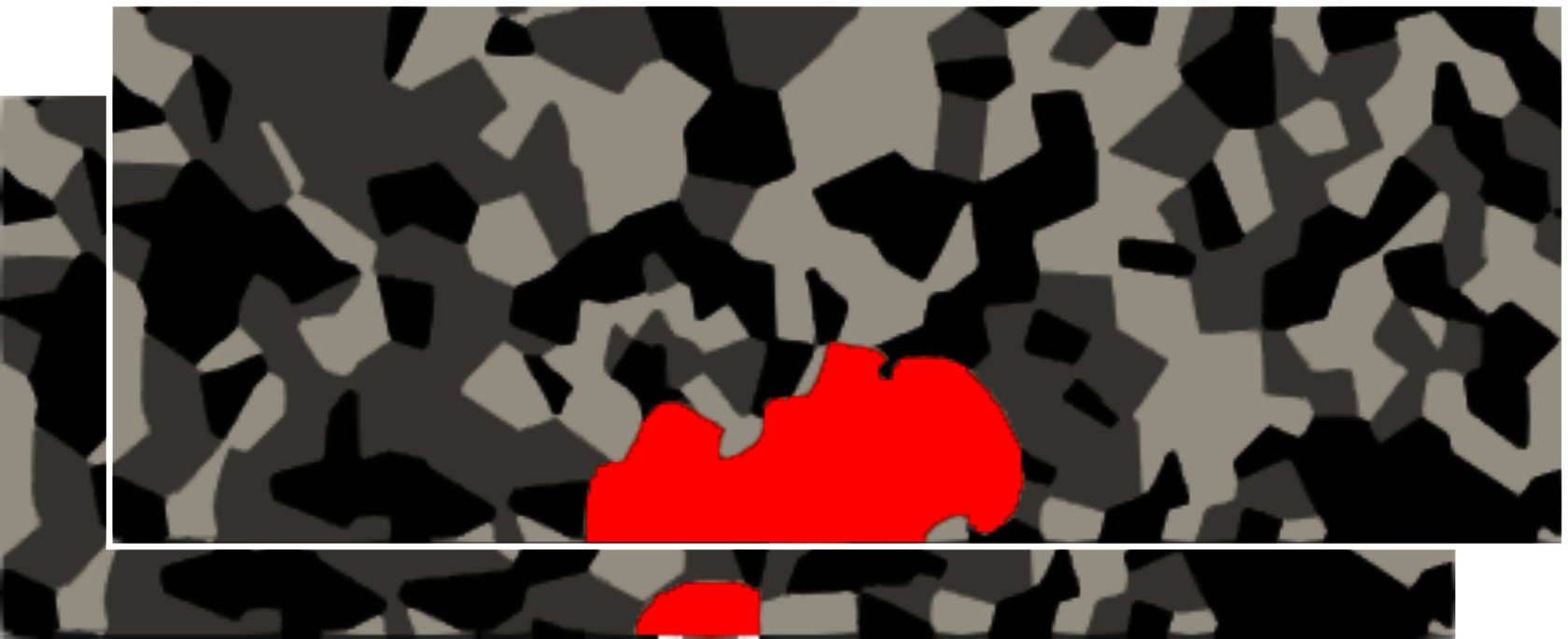
Microscale corrosion in metallic pipes poses a major challenge for infrastructure related to energy transportation and storage. Various diffusion processes are included in corrosion modeling to simulate degradation mechanisms and assess their impact on structural integrity. This research aims to improve the durability and safety of key components of energy systems to ultimately extend the lifetime of critical infrastructure.
Crack growth
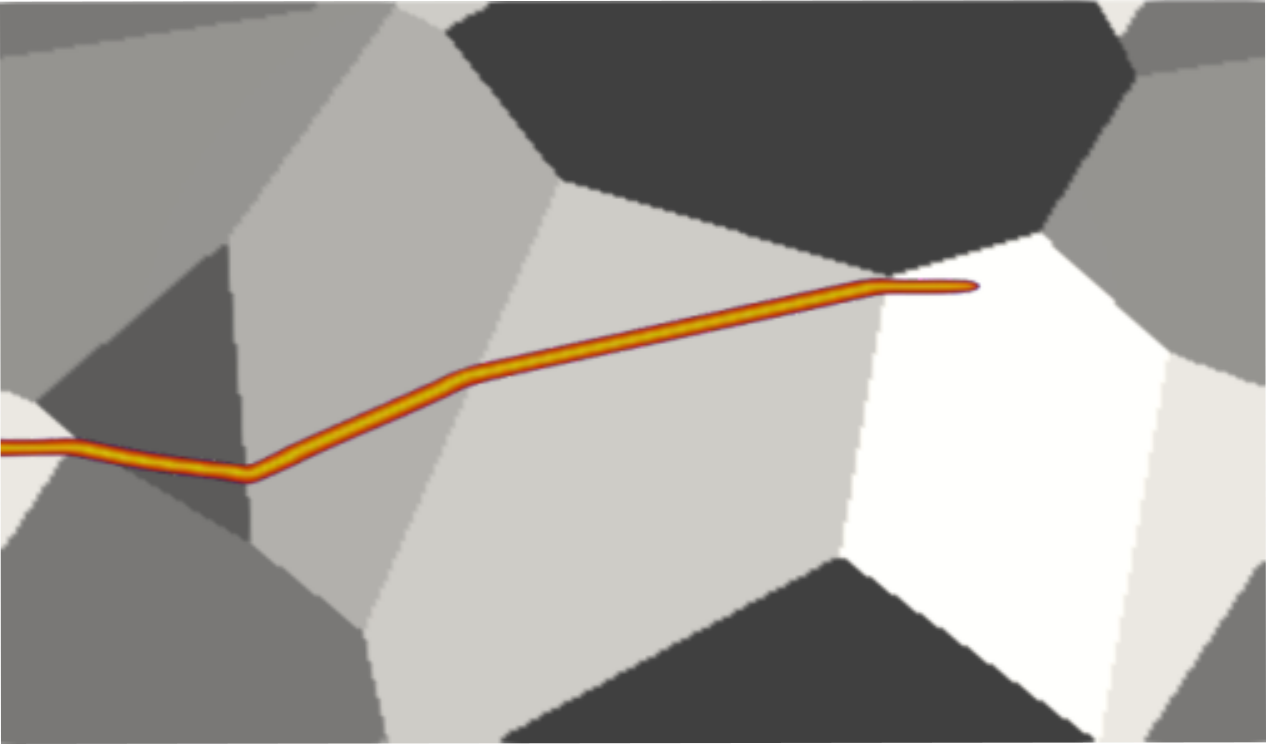
Fracture mechanics in polycrystalline rocks is a crucial area for understanding geological formations used in energy applications and engineered materials. The group is also working on developing and extending existing models of fracture mechanics to investigate the mechanisms of crack initiation and growth in polycrystalline systems. These models focus on describing the influence of crystal orientation, microstructure, fluid pressure, thermal and chemical strains on fracture behavior in multiphase systems.