Internship at CERN: Experience International Research
Gain hands-on experience. Gain international experience. Broaden your career prospects.
Would you like to experience international research firsthand and gain valuable practical experience at a world-renowned research center?
An internship at CERN in Switzerland offers you the opportunity to apply your expertise in an international setting , contribute to exciting projects, and gain valuable experience for your future career. A stint at CERN is invaluable in every respect for your resume and your professional path.
Take advantage of the cooperation agreement between CERN, the State of Baden-Württemberg, and Karlsruhe University of Applied Sciences, and apply for the Technical Student Program. In addition to attractive compensation, you can expect an international work environment, the chance to work as part of a highly specialized team, and exciting insights into research and technical development.
Program Overview


Upcoming Events
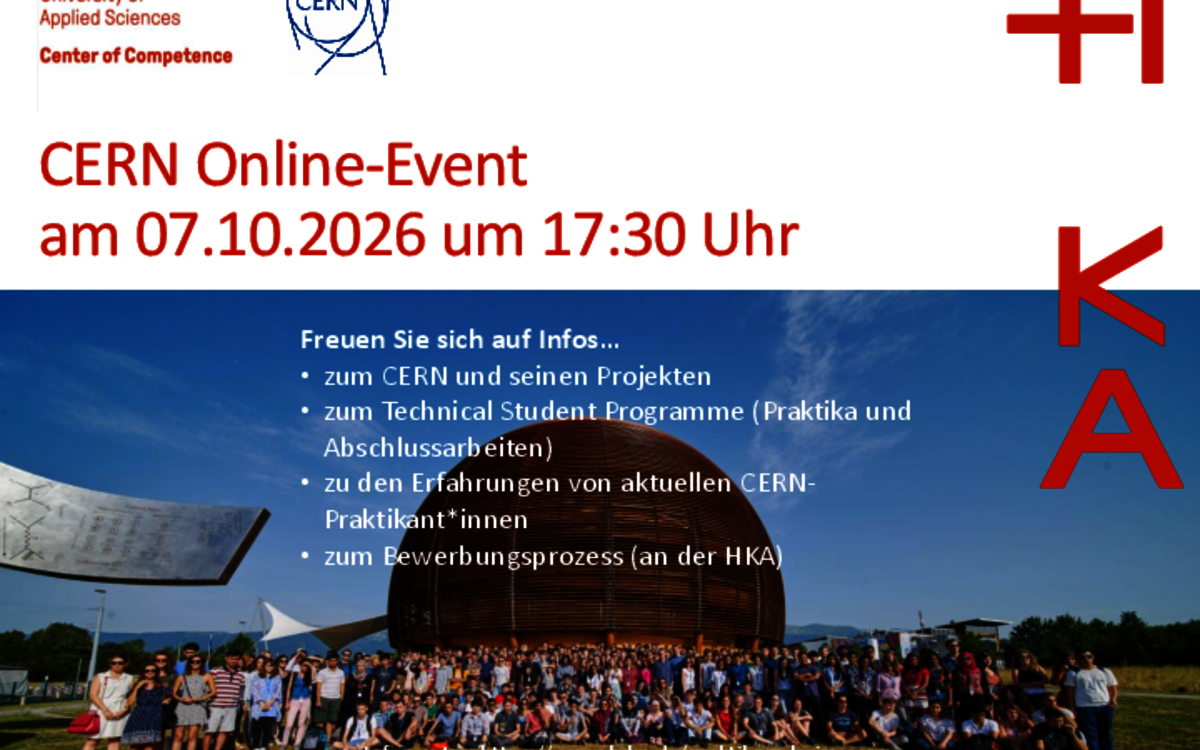

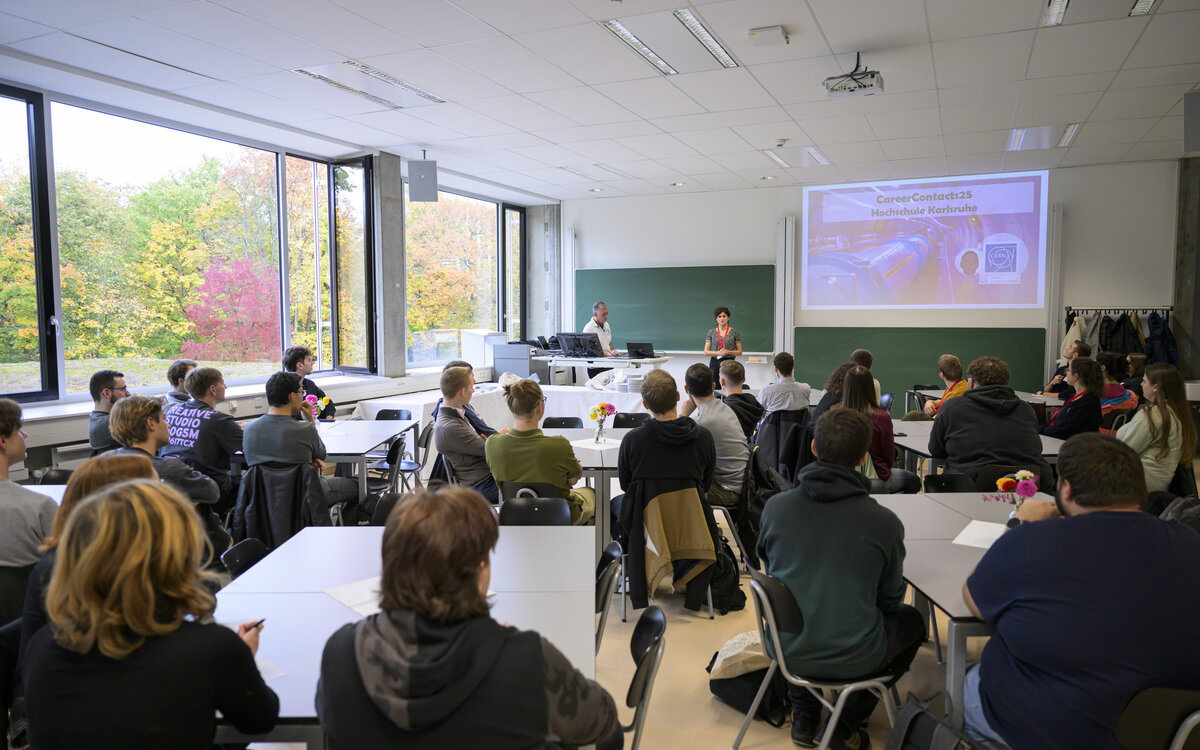
1. Program Information
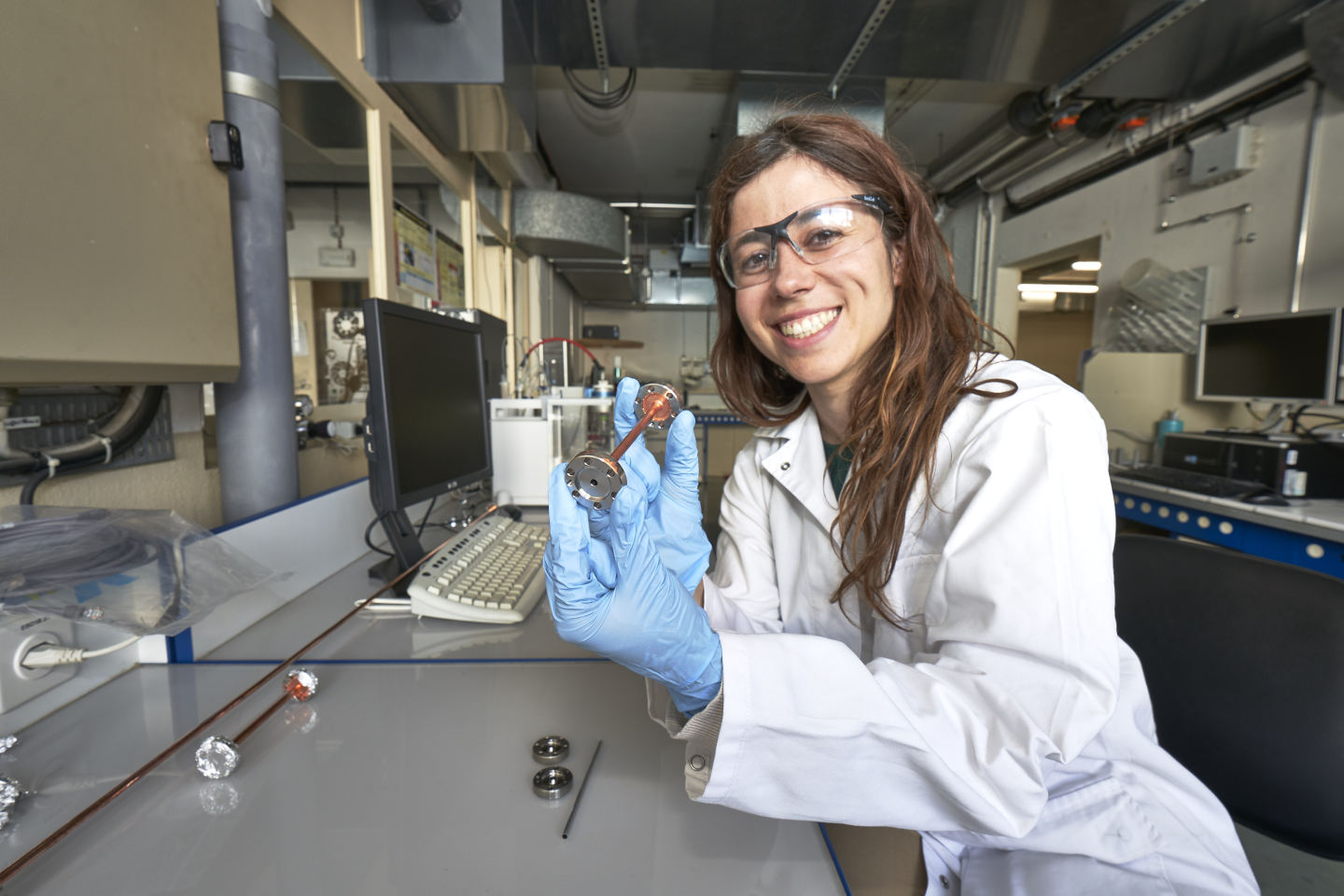
Here's what you can expect:
- An exciting project tailored to your needs
- Integration into a team
- Participation in day-to-day work
- Gaining professional experience even while writing your thesis
- An internship as a stepping stone for your professional career
- And last but not least, an attractive sports program and assistance with finding housing
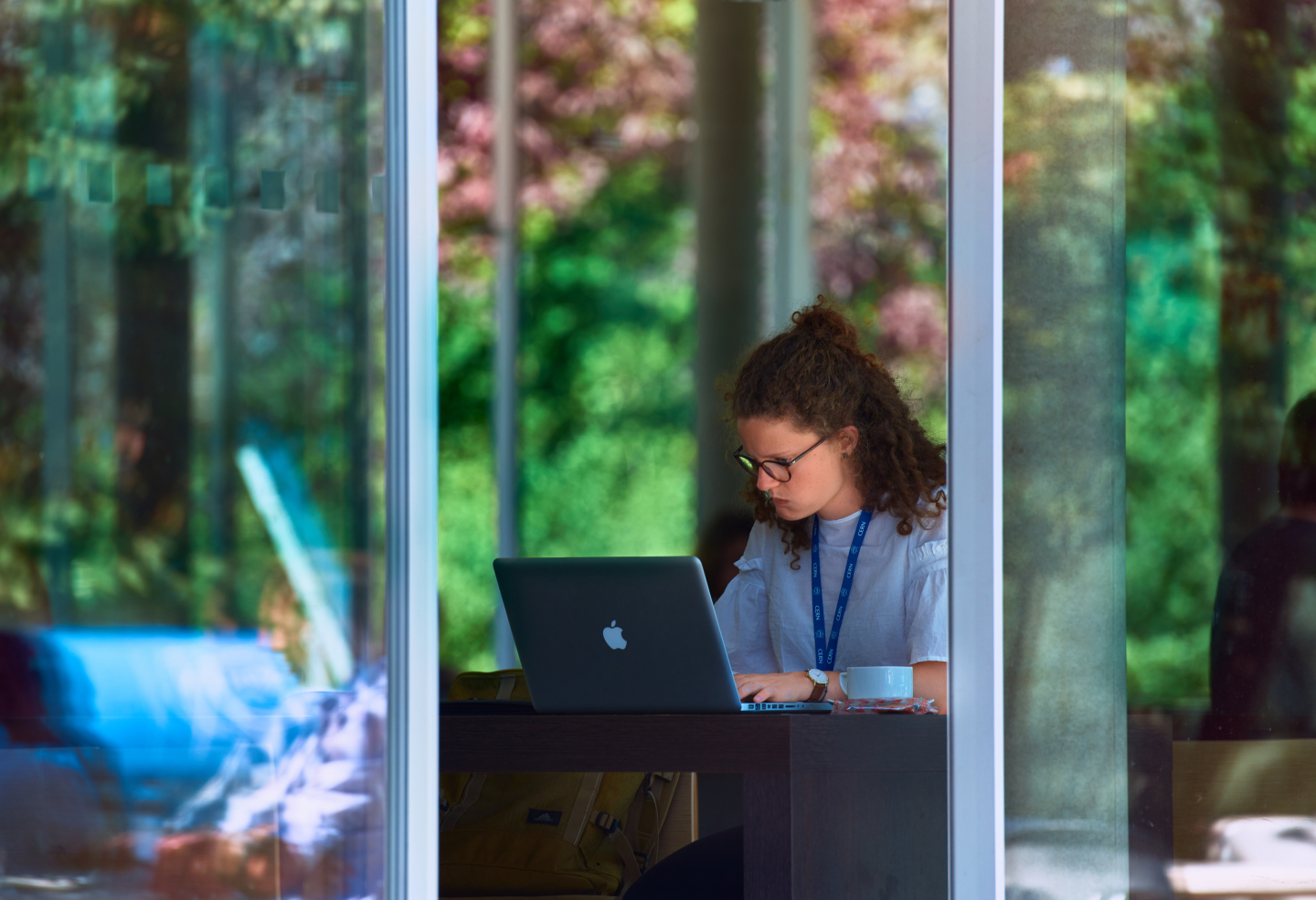
Your Benefits
- Agreement between HKA and CERN = Advantage in the application process
- 3,486 CHF net monthly salary (as of March 2026)
- Travel allowance
- Additional allowance for living with a spouse and/or child(ren)
- Health insurance (including for dependents) in the amount of approximately 172 CHF is deducted from the net salary
- 2.5 days of vacation per month; plus 2 days of special leave for every 6 months of internship duration (e.g., for exams at HKA) and 2 weeks of company-wide vacation at the end of the year
2. Requirements
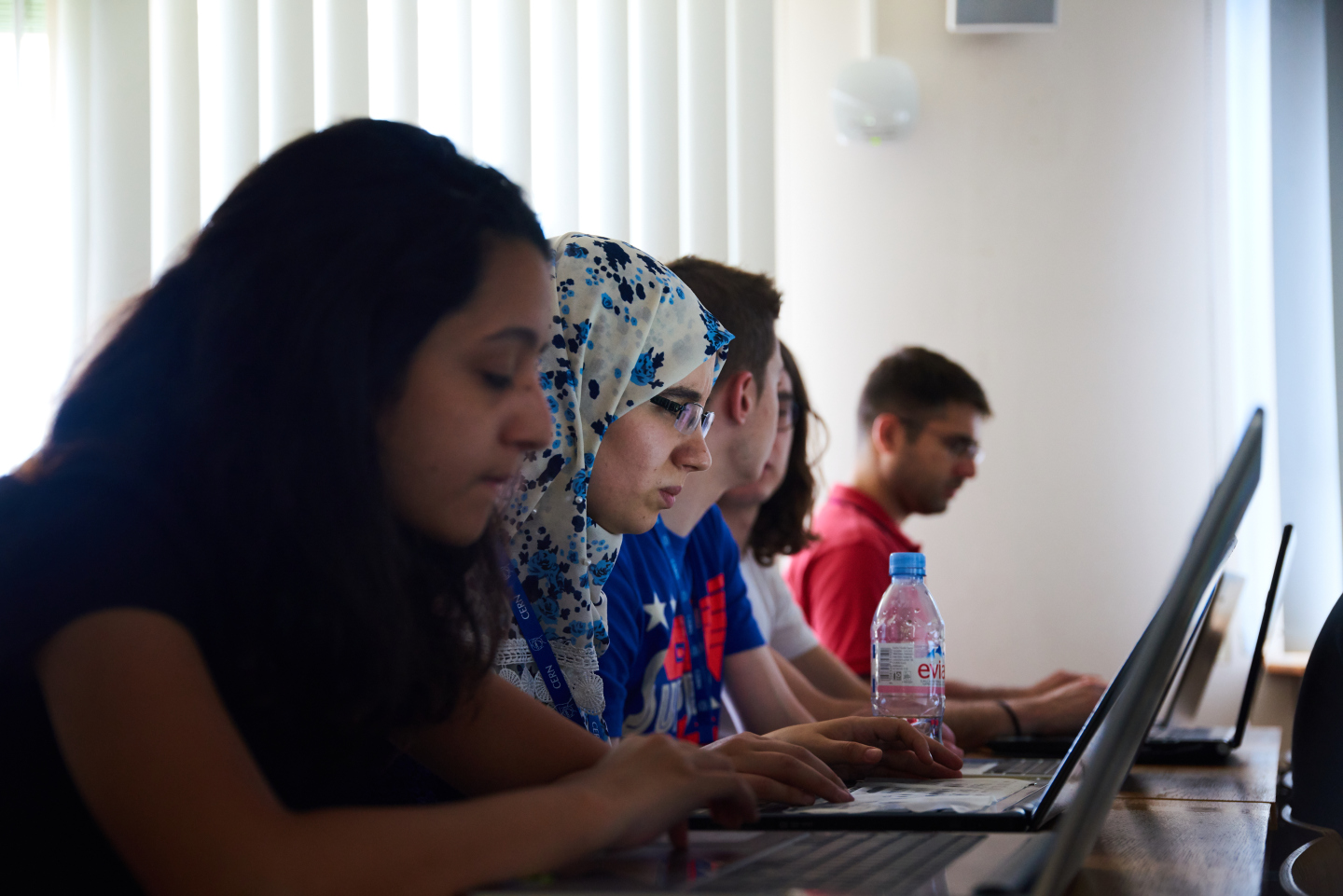
What You'll Bring to the Table
- Citizenship of a CERN Member State or an Associated Member State
- Proficiency in English or French
- Degree in:
- Mechanical Engineering
- Bachelor’s: MMT (MABB, MECB)
- Master’s: MMT (MABM, MECM, MMSM, RKIM)
- IT, Mathematics, and Robotics
- Bachelor's: IWI (DSCB, INFB, WIIB)
- Master's: IWI (INFM, WIIM)
- Electrical or Electronics Engineering
- Bachelor's: EIT (EEIB, EITB, KIIB, QUCB)
- Master's: EIT (EITM, ELWM, SSTM)
- General or Civil Engineering
- Bachelor's: AB (BIWB, BITB, UIWB)
- Master's: AB (BIWM, BITM)
- Materials and Surface Science
- Mechanical Engineering
- At least 3 completed semesters of study
- Enrollment for the entire duration of the internship
- Time available for a 6- to 12-month stay
3. Application Information
4. Testimonials: HKA Students at CERN
Annika Bäurer – Internship in the R&D Department for High-Temperature Superconducting (HTS) Systems (March 1, 2025 – March 31, 2026)
1. What motivated you to apply to CERN?
Science and research have always fascinated me, and I simply had to seize the opportunity to apply to a place as special as CERN. The idea of doing my internship there— where so many incredible and important achievements have their origins—was absolutely thrilling to me. In addition, the multinational environment and the fact that daily work is conducted in English were aspects that really appealed to me and that I was eager to experience.
2. How did the application process go?
Surprisingly straightforward. First, I applied online with my resume, a cover letter, a letter of recommendation from a professor, and a few other required details. The support I received from the university was particularly valuable to me. For one thing, I was glad to receive an extension on the deadline, since I applied on very short notice—much earlier than planned—right in the middle of my exam period. For another, I put a lot of thought into how to structure my application in the best way possible, and the university’s feedback on my documents gave me a great deal of confidence. Shortly afterward, I completed an asynchronous interview, in which you have to answer a few questions via video in a single take. The questions weren’t technical, but rather personal. The point was to show who you are. After that, there was almost three months of silence until I suddenly received an email with the acceptance letter. I could hardly believe it and was really excited to meet my new supervisor for the first time via video call.
3. What’s an internship at CERN like?
I did my internship in the TE-MSC-HSD department, which focuses on the research and development of high-temperature superconducting systems. More specifically, the department investigates and characterizes high-temperature superconducting (HTS) materials through experiments and builds and tests various functional magnets. In addition, the department designed and built the new “superconducting links,” which will be used starting in the summer of 2026 to supply power to the LHC’s new magnets following the HiLumi upgrade.
My internship was in the field of materials testing and magnet construction and was a mix of hands-on work in the workshop and theoretical work on the computer —for me personally, the perfect combination! At the beginning, I worked on the electromagnetic simulation of several racetrack magnets (see photo), then tested individual racetrack magnets electrically in liquid nitrogen, later worked with strain gauges, and toward the end designed and built the electronic monitoring system for a racetrack magnet under mechanical stress. What I particularly enjoyed was being able to take charge of the entire development process—from the first sketch to the practical implementation— on my own. In between, our team repeatedly conducted experiments to more precisely characterize the material’s mechanical and thermal properties. Although I’m studying mechanical engineering, I had a lot to do with electrical engineering. This was a bit overwhelming at first, but it quickly turned into enthusiasm. This experience then motivated me to consider mechanical engineering as well as electrical engineering and computer science when making my future career decisions.
Throughout all my work, my supervisor was always my direct point of contact, and the entire team was always there to help me with any questions I had. I really appreciated that we all came from different disciplines —roughly electrical engineering, applied physics, and mechanical engineering—because it was always very interesting to see how differently everyone approached a problem depending on their background.
4. I would choose to do an internship or write a thesis at CERN again in a heartbeat because…
… I was able to learn about and explore an incredible number of technical concepts —ranging from common topics to highly specialized ones that you rarely get to experience up close.
… I was able to think and act very creatively and had the opportunity to work with remarkably good technical equipment.
… it’s incredibly enriching and fun to collaborate in such a multinational environment with so many different people and to exchange ideas both personally and professionally.
5. My Tips for Those Interested in an Internship or Thesis at CERN
If you’re genuinely interested and motivated, you should just apply and not spend too much time worrying about whether your grades or English are good enough. You don’t have to be perfect—you just have to be open to growing and developing. I think it’s important to put a lot of thought into your cover letter and figure out how to present yourself as authentically as possible in just a few lines of text. I also recommend that everyone apply for a 10- to 12-month term rather than just 6 months, because there’s so much to discover that 6 months simply won’t be enough.

Franziska Reuschel - Internship in the CMS Outer Tracker front-end division (May 1, 2025 - April 30, 2026)
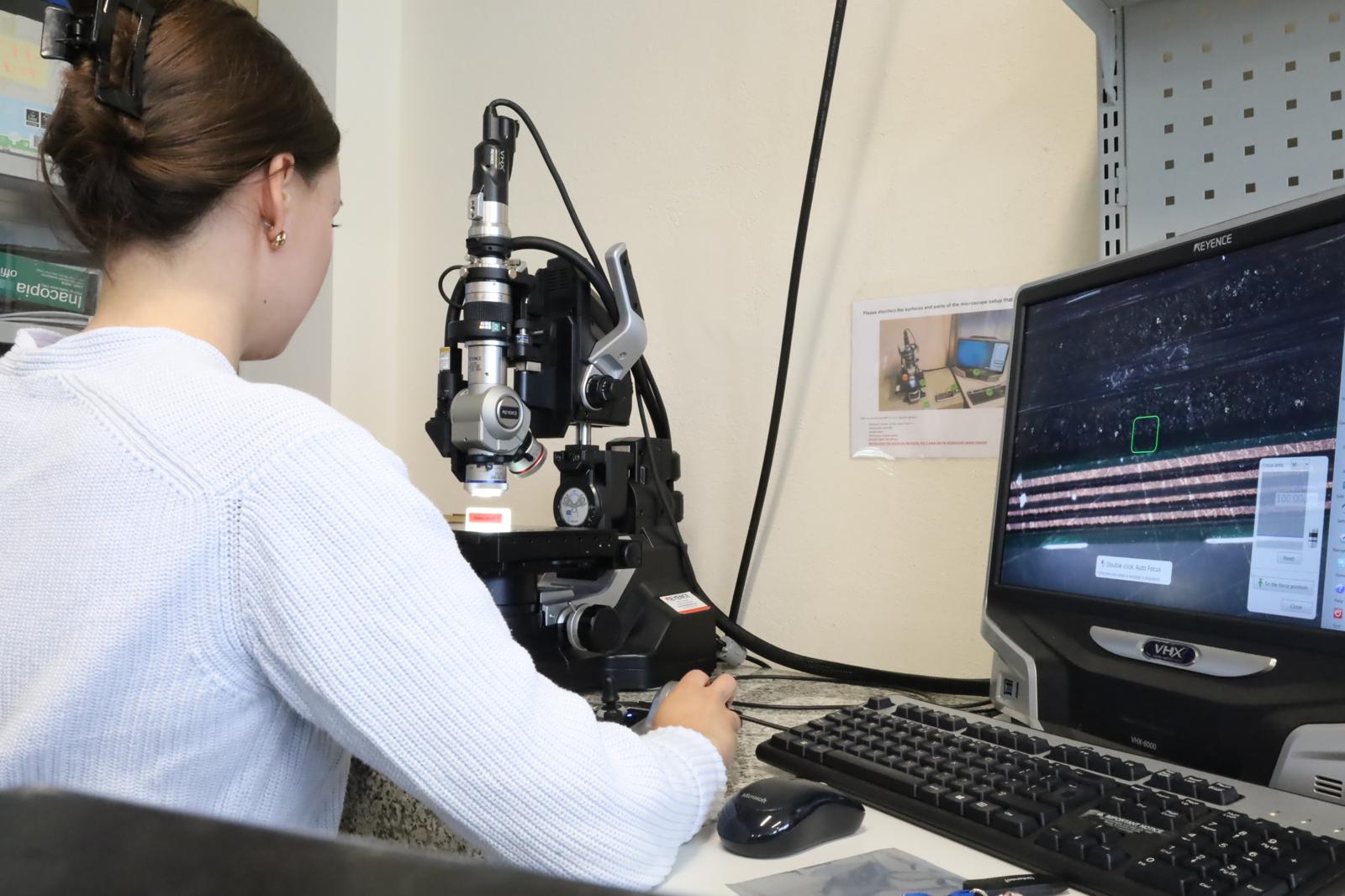
1. What motivated you to apply to CERN?
I found the opportunity to contribute to a meaningful and international research project very exciting. The Technical Student Program offers the ideal setting to combine an internship with a stay abroad. This allowed me to gain new experiences outside of my daily university routine while pursuing my master’s degree.
2. How did the application process go?
As part of the partnership between Karlsruhe University of Applied Sciences and CERN, my application materials were reviewed in advance. The additional online event offered was also very helpful in getting an overview of the application process at CERN. The application to CERN is general for the Technical Student Program and not project-specific. After the application deadline, the departments internally select which applications are a good fit for their projects. As part of the process, I therefore completed various tasks, including a HackerRank test and a coding challenge. I was then invited to a personal video interview, during which I learned more about my current project.
3. What is an internship at CERN like?
At the start of the internship, there are several events to get to know other newcomers. At first, there were so many new impressions and it was all a bit overwhelming, but fortunately, I quickly found my footing. In general, it’s very easy to make connections thanks to the wide variety of lectures, workshops, and recreational activities. My team also welcomed me very warmly and integrated me into the workflows and trained me on the job. The project I worked on develops electronic components for the new CMS detector. This detector is being upgraded as part of the Phase 2 upgrade to meet the requirements for the next test run. I worked on my tasks independently, but could always turn to my colleagues if I had any questions. Basically, a high degree of initiative and organizational skills is a plus when it comes to meeting the requirements.
4. I would choose to do an internship or write a thesis at CERN again in a heartbeat because…
- … it’s a unique opportunity to get a behind-the-scenes look at a renowned research project and to contribute to it.
- … during my internship, I had the chance to meet many people with fascinating backgrounds.
- … even outside of my daily work routine, my time at CERN was a unique experience. I gained new insights, made friends, and learned a lot.
5. My tips for those interested in an internship or thesis project at CERN
CERN is an interdisciplinary research environment where people from a wide variety of fields work together. It requires expertise from various disciplines to install detectors, conduct test runs, and analyze physical phenomena. CERN is much more than just physics and offers numerous opportunities for students in STEM fields. That’s why I can only encourage anyone interested to apply!
Leon Maag - Internship in Experimental Physics / CMS / HGCAL (April 1, 2024 - January 31, 2025)
1. What made you decide to apply to CERN?
To be honest, after graduating from high school, I never thought I’d have anything to do with physics again. As a computer science student, it never even crossed my mind that there might be internships there for me. After all, CERN is a research center for particle physics and, at first glance, has nothing to do with what I’m studying. However, when I saw the job posting on the university’s website , I read it more out of curiosity than with any real intention of applying. But I quickly realized: This sounds exciting. I looked into it further and discovered that only a small part of the work at CERN involves pure physics. Much more important are the development and construction of facilities, detectors, accelerators, and magnets. The Technical Student Program promised that, as a student, I could work right there, so I decided to apply.
2. How did the application process go?
Thanks to the cooperation agreement between Karlsruhe University of Applied Sciences and CERN, the application process was quite straightforward. After uploading my documents to the online portal, I had an asynchronous interview with questions about myself and my interests. After a short wait, I then had direct conversations with potential teams, during which they explained their projects and my potential areas of responsibility to me.
3. What is an internship at CERN like?
I chose the HGCAL team. With the second phase of the LHC, the so-called “luminosity”—that is, the number of collisions—will increase from 40 to 140 per event. To handle this new volume, all detectors must also be upgraded accordingly. My team worked on upgrading a subdetector of the CMS experiment, which had played a decisive role in the discovery of the Higgs boson in 2012. More specifically, we worked on the High-Granularity Calorimeter, a detector that measures the energy of individual particles. My first day at CERN—which was also my first day on the job—began with a large welcome session featuring an opening speech and some icebreaker games, during which I got to know some of the roughly 80 other technical students participating that month. Immediately following the session, I headed to my workstation, where I met my supervisor and mentor, as well as the rest of my team, for the first time. During the lab tour, I also got a quick crash course in physics on the side, since my physics knowledge at that point was already three years out of date. Within the first day, the number of particles I was familiar with had at least tripled.
The task assigned to me was to develop control software for the initialization, parameterization, and operation of the detector’s readout chain. To this end, I worked closely with my supervisor to define the requirements, but I was largely independent in designing the software architecture. It was particularly positive that I wasn’t treated like an intern, but rather as a full-fledged team member with a great deal of responsibility. When it came to software, my opinion was regularly sought, and my suggestions were seriously considered. That was definitely something special.
The absolute highlight was the two beam tests: two-week phases during which our prototype was tested under real-world conditions in the particle beam. These tests are crucial for mass production and the allocation of research funding. Everyone pulled together during this time and was extra motivated. Seeing how the work of the past few months paid off was very satisfying.
4. I would choose to do an internship or write a thesis at CERN again in a heartbeat because…
- … life at CERN is great even outside of work. Even in the first few weeks, I found a close circle of friends among other technical and doctoral students. Together, we went hiking, climbing, or took trips to Geneva, Lausanne, and Annecy. The surroundings, with the Alpine mountain backdrop and Lake Geneva, are incredibly beautiful.
- … CERN organizes ski tours in the winter. From December through February, ski buses run every weekend to nearby resorts, and they even offer free ski lessons for beginners and advanced skiers.
- … there’s definitely never a dull moment at CERN, whether at work or in your free time.
- … the internship was a once-in-a-lifetime opportunity that I would repeat in a heartbeat if given the chance.
5. My Tips for Those Interested in an Internship or Thesis at CERN
- Prepare a littlefor the asynchronous interviews by learning about CERN and its mission. Don’t worry—they won’t test your knowledge of physics, but a little basic knowledge about CERN itself, the LHC, and what CERN stands for can’t hurt.
- Don’t let it throw you off if the application process takes longer than expected. I applied in October myself and didn’t receive an acceptance until February.

Nick Dienemann - Internship in Applied Physics / Fast Beam Condition Monitor (April 1, 2024 - August 31, 2024)

1. What motivated you to apply to CERN?
After completing my bachelor’s degree, it was clear to me: Before starting a master’s program, I wanted to have a unique, new experience—something that went beyond a traditional academic program. I had already learned about the HKA’s partnership with CERN while I was still a student, but I wasn’t able to secure an internship during my cooperative study program. Once I completed my bachelor’s degree, that restriction was lifted, and I seized the opportunity right away. For me, CERN has always been a fascinating place. A place where physics and technology come together at the absolute highest level. Just the idea that particles are sent through kilometer-long tunnels at nearly the speed of light to explore the fundamental building blocks of our universe completely captivated me. I really wanted to see what a place like that looks like from the inside and how people work there. The chance to be even a small part of it sounded incredibly exciting. And since I ’d been wanting to spend some time abroad after my bachelor’s anyway , the internship at CERN was just right for me.
2. How did the application process go?
The application for the Technical Student Program is multifaceted but well-structured. First, as part of the cooperation program, I prepared the required documents (resume, statement of purpose, transcript, letters of recommendation) together with Martina Link from the HKA. Her support was very helpful in this process. I then submitted my application through the official CERN portal in several fields of study, since I had diverse interests and didn’t want to commit to one right away.
After the Human Resources department reviewed the documents, I participated in an asynchronous video interview. I had to answer five questions—which were not disclosed in advance—within a short time frame and record my responses on video—a challenging but also exciting experience. Upon successfully completing this step, you are added to a candidate pool. Up to this point, applicants are reviewed solely by the HR department at CERN. From this point on, the individual research groups at CERN can view the profiles and select candidates. I was eventually invited to an individual technical interview, and after a pleasant and relaxed conversation, I received the offer, which I gladly accepted.
3. What is the internship process like at CERN?
On the first day, the internship begins with a group orientation session. This is where all the new technical students who are starting in the same cycle come together. In addition to an introduction to CERN and some organizational information, the real highlight, however, is getting to know the others. Everyone is new to the place, in a similar life situation, and shares an interest in science and technology—that creates an instant connection. The first friendships form right at this event and often last beyond the internship.
Afterward, we headed straight to the various departments. From that point on, the internship is different for every student, because the work students do at CERN is extremely diverse. From developing an improved cooling system for the particle accelerator, to software for controlling the magnets, to machine learning for analyzing the physics experiments. No two internships are alike.
I myself worked in a group that developed the Fast Beam Condition Monitor (FBCM): a new detector for determining the collision rate at the CMS experiment, one of the two major experiments at the Large Hadron Collider (LHC). This measurement is essential for calibrating many other detectors and is therefore of central importance.
During my internship, I was very fortunate to witness two so-called beam tests. A beam test is a week of intensive testing during which the new detector prototype was exposed to a high-energy particle beam (~15 GeV). My task was to program the data acquisition for these tests and to develop a framework for analysis. The goal was to compare different test conditions, identify physical effects, and draw conclusions about the detector’s efficiency and accuracy. In addition, I worked in the lab to reproduce certain effects found during the data analysis of our detector using a small radioactive source. Overall, I thoroughly enjoyed this work, in part because it bridged the gap between programming and experimental physics.
4. I would choose to do an internship or write a thesis at CERN again in a heartbeat because…
Looking back, my time at CERN was one of the best periods of my life so far. Three things made it special for me:
- The people: In just half a year, I formed friendships that might otherwise have taken years to develop. Nowhere else have I seen such a high concentration of motivated, open-minded, and impressive people as at CERN.
- The work: The opportunity to work at a place like CERN, with state-of-the-art technology in a global scientific environment, is simply unique. The work didn’t feel like work at all, but rather like a gathering of people tinkering away at a shared vision.
- The surroundings: The region around Geneva is beautiful. Lake Geneva, the nearby mountains, hiking trails in the summer, skiing in the winter. And thanks to the very good compensation, you can truly enjoy all of this.
5. My Tips for Those Interested in an Internship or Thesis Project at CERN
If you’re thinking about applying for an internship or a thesis project at CERN, I can only advise you: Go for it! It doesn’t matter whether you have a background in physics or another field, because CERN offers a wide range of opportunities, including in areas such as computer science, engineering, or even economics. Be open-minded and don’t be afraid to tackle topics you’re not yet familiar with. With a little curiosity and dedication , it can turn into an unforgettable experience—perhaps even the best of your life so far.
Any questions? FAQs

Here you'll find answers to the most frequently asked questions about the following topics:
- A. General questions about the application
- B. Questions about the application process
- C. Questions about application materials
Can’t find an answer to your question? Or is there a question that should be included here?
Please feel free to contact sarah.fatemi@h-ka.de
A. General Questions About the Application
1. What are my chances of being accepted?
You should have good to very good grades in your studies. An interesting resume and a compelling statement of purpose are just as important. Sarah Fatemi can help you with this.
2. Can I apply for a specific project?
No, applications are only accepted for specific fields. Of course, you can mention areas of interest or focus in your statement of purpose and during the online interview.
3. Can I apply for multiple areas?
Yes, you can apply for multiple fields. However, each field requires its own application (separate application link).
4. By when must I provide proof that I have already completed three semesters (18 months) of my studies?
Ideally, you will have already completed at least three semesters of study by the time you apply. However, proof of the 18 months of study must be provided no later than the selection committee meeting.
5. Which college semesters count toward the requirement of three completed semesters of study?
All university semesters completed to date at the bachelor’s or master’s level count toward this requirement—even if you have changed universities or degree programs. The semesters do not have to have been completed in your current degree program or at a university that is part of the cooperation agreement.
6. Can I apply to the Technical Student Program more than once?
Yes, you may generally reapply as long as you have not yet reached the maximum stay of 14 months.
Please do not interpret a previous rejection as negative feedback regarding your personal profile or academic qualifications. Since the available positions and projects change from round to round, reapplying may well be worthwhile.
B. Questions About the Application Process
1. Why do I need to submit my application materials to the Center of Competence in advance?
Every year, a large number of students apply for an internship at CERN. Under the terms of the cooperation agreement, you have the opportunity to receive assistance with your application and to have your application materials reviewed. This increases your chances of being accepted. Furthermore, this is the only way to receive the application link.
C. Questions About the Application Materials
1. What if the letters of recommendation from my former employers are only in German?
A German letter of recommendation is accepted. However, you should also submit a simple translation (into English or French; you may provide it yourself). Otherwise, this could put you at a disadvantage, as not all members of the selection committee speak German.
2. What happens if I don’t receive a letter of recommendation from a professor in time?
Your professors are usually aware of the cooperation agreement with CERN and the deadlines. They should therefore support you with a detailed letter of recommendation. If you do not receive a letter of recommendation in time, your professor can also upload it later, after you have submitted your online application.
3. Does the letter of recommendation have to follow a specific template, or is a template available?
No, there are no specific requirements or templates for the letter of recommendation. It is up to your professor to highlight your unique qualities and qualifications—whether academic or personal—that make you a suitable candidate for an internship at CERN.
4. For Master’s students, can the letter of recommendation also be written by professors from their previous Bachelor’s program?
Yes, that’s not a problem. The letter of recommendation does not have to be written by a current professor. Especially if you have just started your master’s program, the professors from your bachelor’s program may be better able to assess and evaluate you.
